
Where Do You Store Nuts? Your Pantry May Be the Wrong Answer
I grew up thinking nuts belonged in the pantry. You opened the bag, folded down the top, tucked it beside the flour and sugar, and grabbed a handful whenever you needed them.
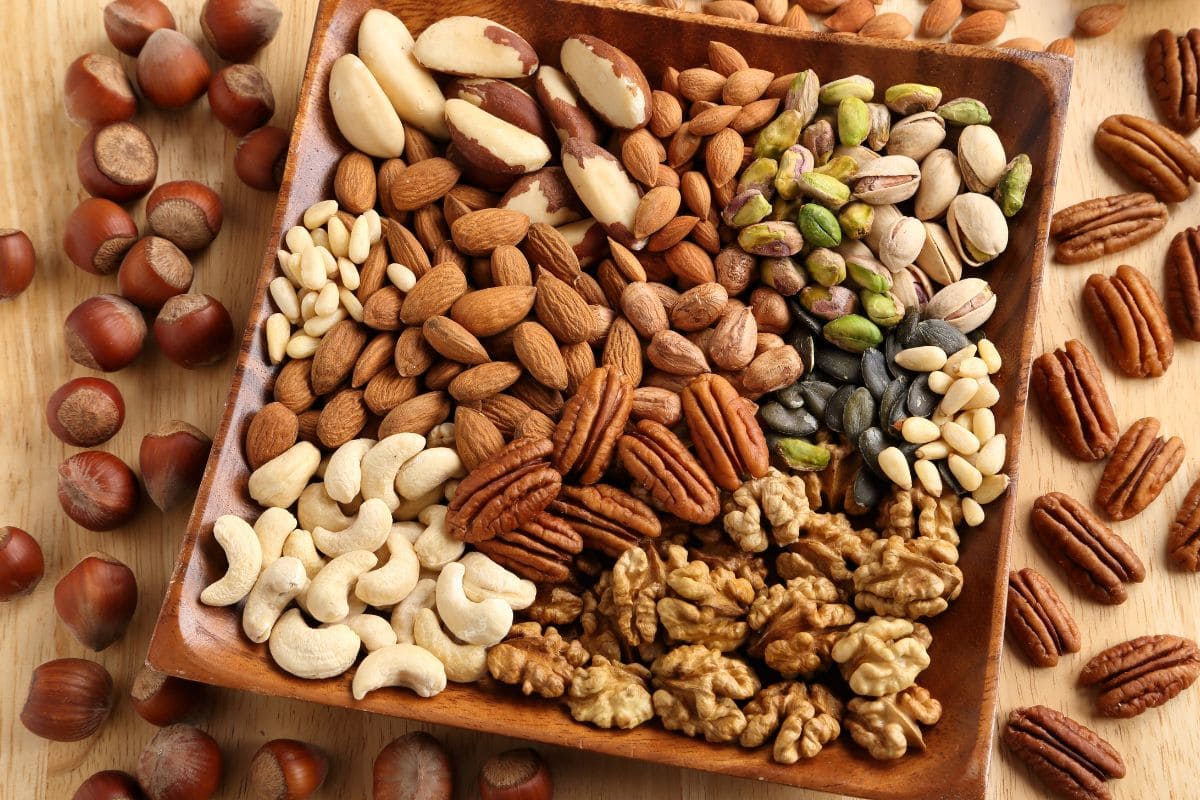
But considering what a bag of pecans or walnuts costs these days, discovering that half-forgotten bag has developed a bitter, stale taste is particularly painful.
It turns out the pantry is not necessarily the best place for nuts, especially if you are not going to use them fairly quickly. Depending on how long you plan to keep them, your refrigerator or freezer may be a much better choice.
That Expensive Bag Is More Delicate Than It Looks
The very thing that makes nuts rich and satisfying also makes storage important: their oils.
According to the UC Davis Postharvest Research and Extension Center, rancidity develops when fats in nuts oxidize, creating unpleasant flavors. Temperature, moisture, and storage time can all affect how well nuts maintain their quality.
UC Davis says nuts stored at room temperature can maintain good quality for up to a few months, depending on conditions. Cooler storage can extend that considerably.
So if you buy a big bag at a warehouse store because the price looks too good to pass up, leaving the whole thing in the pantry for months may defeat the purpose of buying in bulk.
The Pantry Is Not Always Wrong
Before you clear an entire refrigerator shelf for almonds, there is an important distinction.
If you know you will use your nuts within a few weeks, keeping them at room temperature can be perfectly reasonable. Store them tightly sealed in a cool, dry cupboard away from sunlight and heat.
The cupboard above or beside the stove would not be my first choice. Heat can speed up the quality problems you are trying to prevent.
For pecans specifically, Pecans.com recommends room temperature storage when they will be eaten within about two to four weeks. They also recommend keeping pecans airtight, dry, and away from heat.
The longer I expect a bag to hang around, the more likely I am to skip the pantry altogether.
Your Refrigerator Might Be the Better Nut Drawer

If you are not sure when you will finish a bag, refrigeration is an easy solution. UC Davis recommends putting nuts in a sealed container in the refrigerator or freezer when you do not expect to eat them within a few weeks.
That sealed container matters, too. Nuts can absorb odors from other foods around them.
Nobody wants a pecan that tastes faintly like last night’s garlic.
The University of Georgia Pecan Extension also points out that pecans can absorb flavors and odors from other stored foods.
A tightly sealed container or freezer bag helps protect both their flavor and quality.
Buying Nuts in Bulk? This Is Where I Would Put Them
For long term storage, the freezer wins.
The National Center for Home Food Preservation provides guidance showing that frozen nuts can maintain good quality for extended periods, although the exact storage time depends on the variety.
UC Davis gives a general guideline that nuts stored at 0°F or below can maintain their quality for as long as two years.
That makes freezing especially useful if you stock up on nuts during holiday sales or buy the big bags to save money.
For a home kitchen, keep it simple. Portion the nuts into airtight freezer containers or freezer bags, remove as much excess air as you can, and label them with the date.
Dividing them into smaller portions also means you do not have to keep opening one giant bag every time you need half a cup for brownies or banana bread.
Pecans Are One Nut I Almost Always Freeze
Pecans are a perfect example of why storage matters because they contain a lot of oil.
If I buy several bags while they are on sale around the holidays, I do not want to race against the clock trying to use them. I would rather freeze most of them and pull out what I need.
Frozen pecans can remain fresh for up to two years when stored properly.
They can also be used straight from the freezer in many recipes, which makes this one of those storage tricks that actually makes cooking easier.
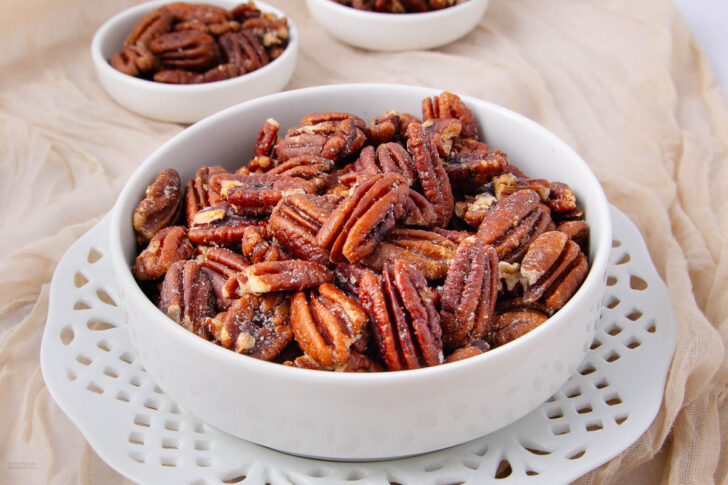
And when I am craving warm buttery pecans for snacking, I can pull out what I need and make my Roasted Buttery Pecans in a smaller batch instead of roasting everything at once.
Before You Bake With Them, Do This Quick Test
Storage recommendations are useful, but your senses can tell you quite a bit too. Give older nuts a sniff before dumping them into your cookie dough.
Fresh nuts should smell pleasantly nutty. A sharp, sour, stale, or paint like odor can be a sign that the oils have gone rancid.
Then taste one before using the whole batch. An unpleasant bitter or soapy flavor is another clue that the nuts are past their prime. And if you see mold or obvious signs of spoilage, toss them rather than trying to salvage the batch.
It is a five second check that could save an entire tray of cookies.
So, Where Should You Be Keeping Your Nuts?
It really comes down to how quickly you use them.
If you are going through the bag within a few weeks, an airtight container in a cool pantry is convenient.
If the nuts are going to hang around for several months, the refrigerator is the safer bet for maintaining freshness.
And if you buy pecans, walnuts, almonds, or other nuts in bulk, the freezer can help protect that grocery investment for much longer.
I have changed the way I think about storing nuts. Instead of asking whether they can go in the pantry, I ask how long they are going to be sitting there.
For an expensive ingredient that can quietly lose quality while you are not looking, that is one grocery habit worth reconsidering.
My Favorite Nut Containers
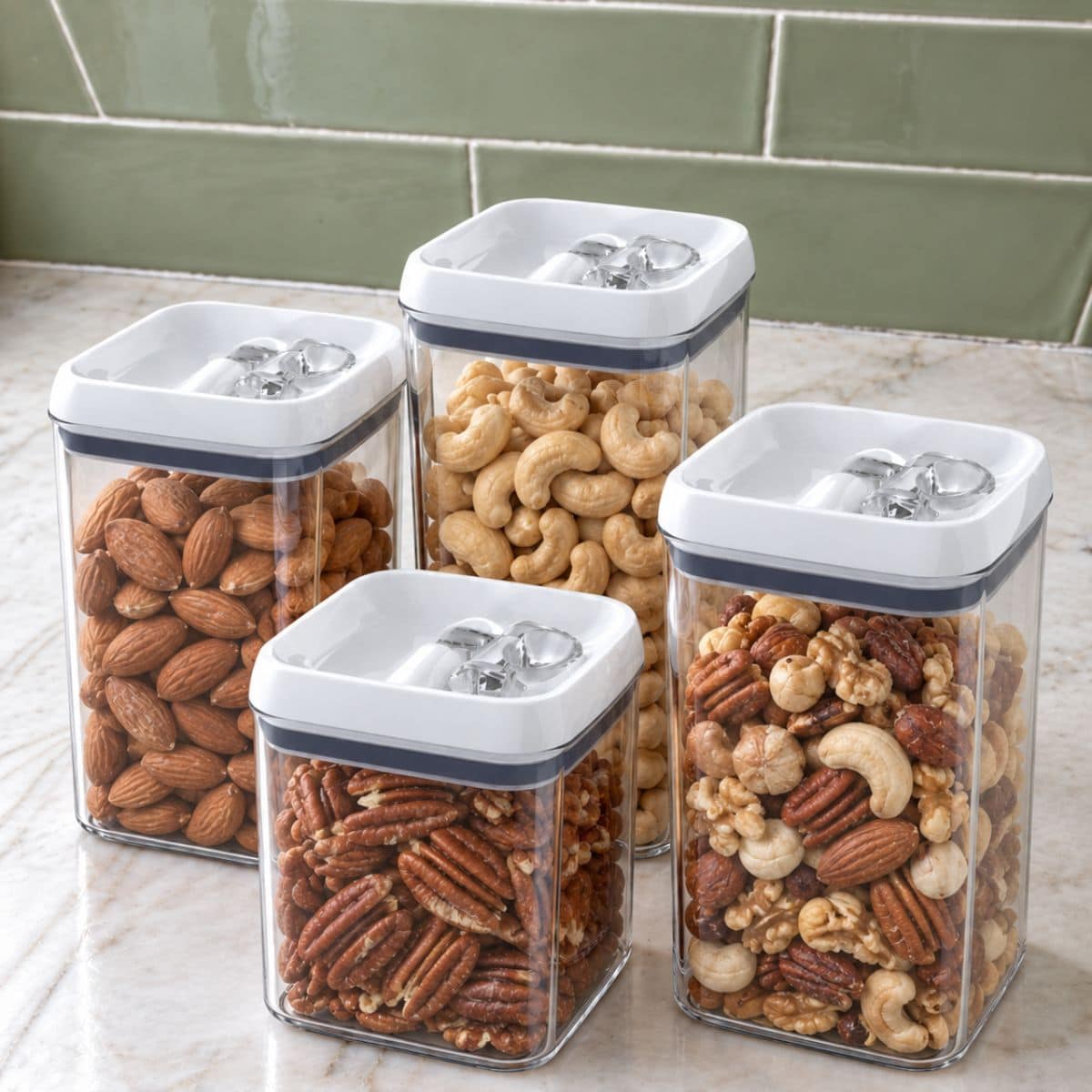
I really like these Better Homes and Gardens FlupTite Food Storage Containers. I can see what’s inside, and the locking top makes them perfect for the pantry or refrigerator.