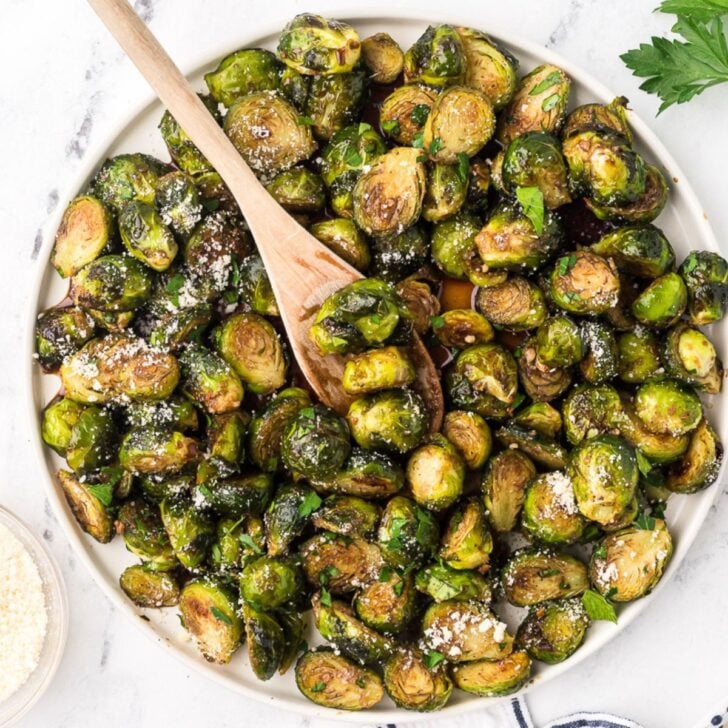
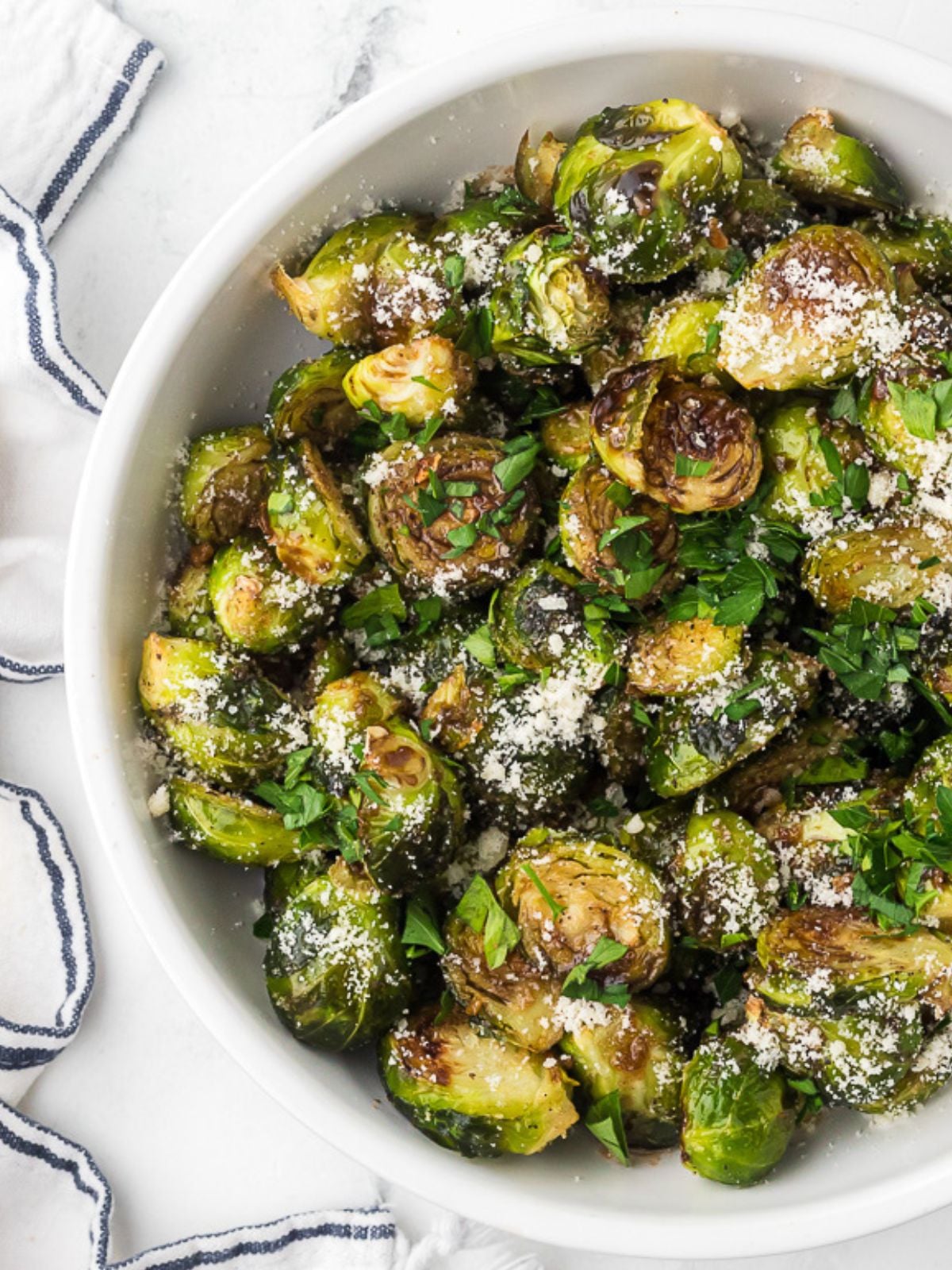
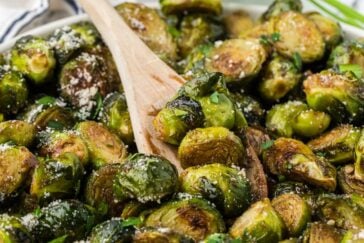
Brussels sprouts with balsamic glaze are roasted at 425 degrees Fahrenheit until the edges turn golden and crispy, then tossed in a simple glaze of balsamic vinegar, honey, brown sugar, and Dijon mustard. Freshly grated Parmesan and fresh parsley finish them off, which makes these balsamic roasted Brussels sprouts a restaurant-style side that works on a weeknight or a holiday table. The glaze simmers on the stove while the sprouts roast, so the whole thing takes about 40 minutes and serves 6.
I have always enjoyed Brussels sprouts, but my husband, not so much. I’ve tried many recipes to get him on Team Brussels Sprouts. This is the one that finally made him enjoy them as a side dish, and the first time he ate them, I knew it was a good recipe because he went back for seconds. I think it’s the sweetness of the honey and balsamic vinegar, the tang of the Dijon, and of course the cheese on top, which is always a winner for him.
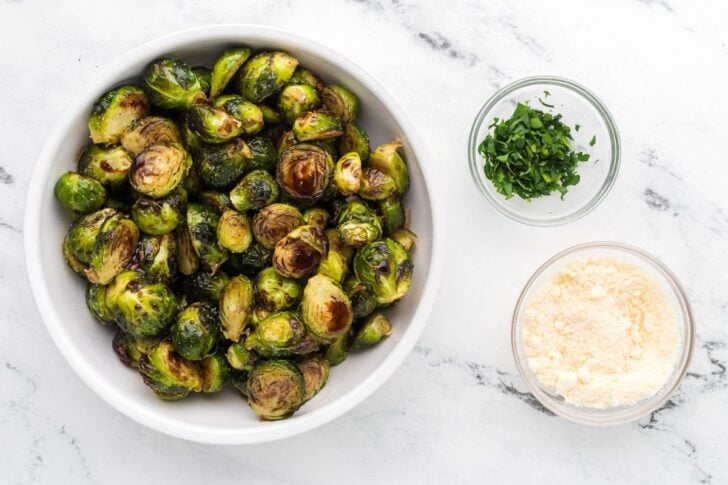
Main Ingredients Needed For Brussels Sprouts With Balsamic Glaze
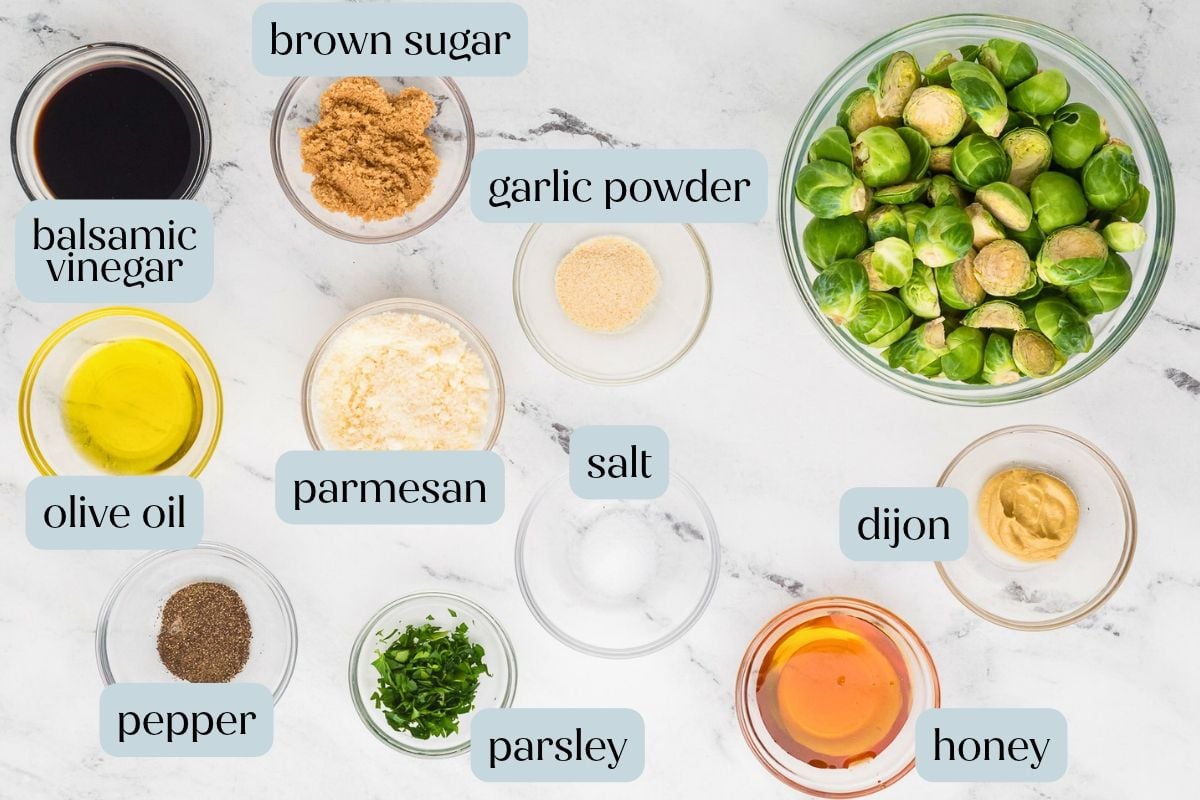
Here’s a quick overview of the key ingredients for this recipe. For the full list of ingredients and exact measurements, jump to the recipe card.
For the Brussels Sprouts
- Brussels sproutsFresh is best here. Look for bright green, firm sprouts that feel heavy for their size, with tightly packed leaves, and skip any with yellowing leaves or black spots. Try to buy sprouts that are close to the same size so they cook evenly. Frozen ones hold more moisture and generally won’t get as crispy, so if frozen is all you have, thaw them completely and pat them very dry before roasting.
- Olive oilThis is what coats the sprouts for roasting. Use cold-pressed olive oil, not an olive oil that’s a blend of oils. Avocado oil works well too.
- Garlic powderThis adds the savory garlic flavor that gets tossed on before roasting.
For the Balsamic Glaze
- Balsamic vinegar: This is the base of the glaze, and it simmers on the stovetop until it lightly coats the back of a spoon. I use Giusti 3 Gold Medals Balsamic Vinegar of Modena IGP, Italy, but any good quality balsamic vinegar will do. The key is to buy one that is thick and aged well, not thin.
- Honey: This brings the sweetness to the glaze. Make sure it’s pure honey, because some store-bought honey has corn syrup added. If the label lists anything besides honey, or calls it a blend, put it back.
- Brown sugar: This adds a little more sweetness. If you’re out, you can use more honey or maple syrup, although the glaze’s flavor and consistency may change slightly.
- Dijon mustard: A little Dijon is where the tang comes from. Whole-grain mustard works well as a substitute.
To Finish
- Parmesan cheese: This is the savory finish on top, and it’s what makes these Parmesan roasted Brussels sprouts a winner with my husband. Grate it fresh.
- Fresh parsley: This is the fresh garnish that goes on at the end.
How To Make Brussels Sprouts With Balsamic Glaze
Golden, crispy edges, tender centers, and a sweet and tangy glaze are what make Brussels sprouts with balsamic glaze so good.
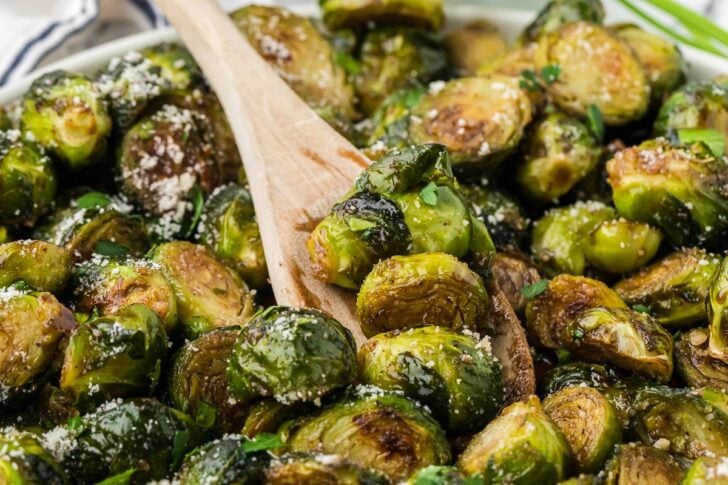
Tips for Crispy Roasted Brussels Sprouts With Balsamic Glaze
Here’s what I learned while testing these crispy roasted Brussels sprouts:
- Don’t Overcrowd the Pan: Giving the sprouts enough room lets them roast and caramelize instead of steaming. Use two baking sheets if you need to.
- Place Them Cut-Side Down: This helps the flat sides develop those golden, caramelized edges.
- Larger Sprouts Need More Time: If yours are larger, they may need a few extra minutes, so go by the edges and centers rather than the timer alone.
- Keep an Eye on the Glaze: I watched mine closely because it thickens as it cools, and I didn’t want it too sticky. You want it slightly thickened, not reduced too much, and it’s ready when it lightly coats the back of a spoon.
- Add the Parmesan While They’re Warm: The cheese softens slightly over the top and adds a savory finishing touch.
- Go Extra Crispy: If you want them extra crispy, roast them another 3 to 5 minutes before adding the glaze.
Once you’ve made it the classic way, have fun with it. I’ve tested every one of these swaps myself:
- Maple Syrup: This is my favorite swap. Use it in place of the honey for a slightly different flavor.
- Pecorino Romano: Use it in place of the Parmesan for a saltier, sharper flavor.
- No Cheese: You can leave the cheese out entirely.
- Fresh Thyme: Use it in place of the parsley.
These Brussels sprouts are perfect for a casual dinner party alongside my Sliced Herb Crusted Beef Sirloin Tip Roast. They’re also special enough for a holiday table with my Glazed Ham With Marmalade or a turkey made with my Apple Cider Turkey Brine.
Make Ahead Balsamic Glaze and Prepped Brussels Sprouts
Brussels sprouts with balsamic glaze are a good one for hosting, because most of the work is done before anyone rings the doorbell. I wash, trim, and halve my Brussels sprouts the night before, and I make the balsamic glaze the day before too, though it can be made up to 3 days ahead. That leaves just the roasting for the day itself, so for the best crispy texture, roast the sprouts shortly before serving, then toss them with the glaze, Parmesan, and parsley. The recipe card notes have the details for storing the glaze and warming it back up.
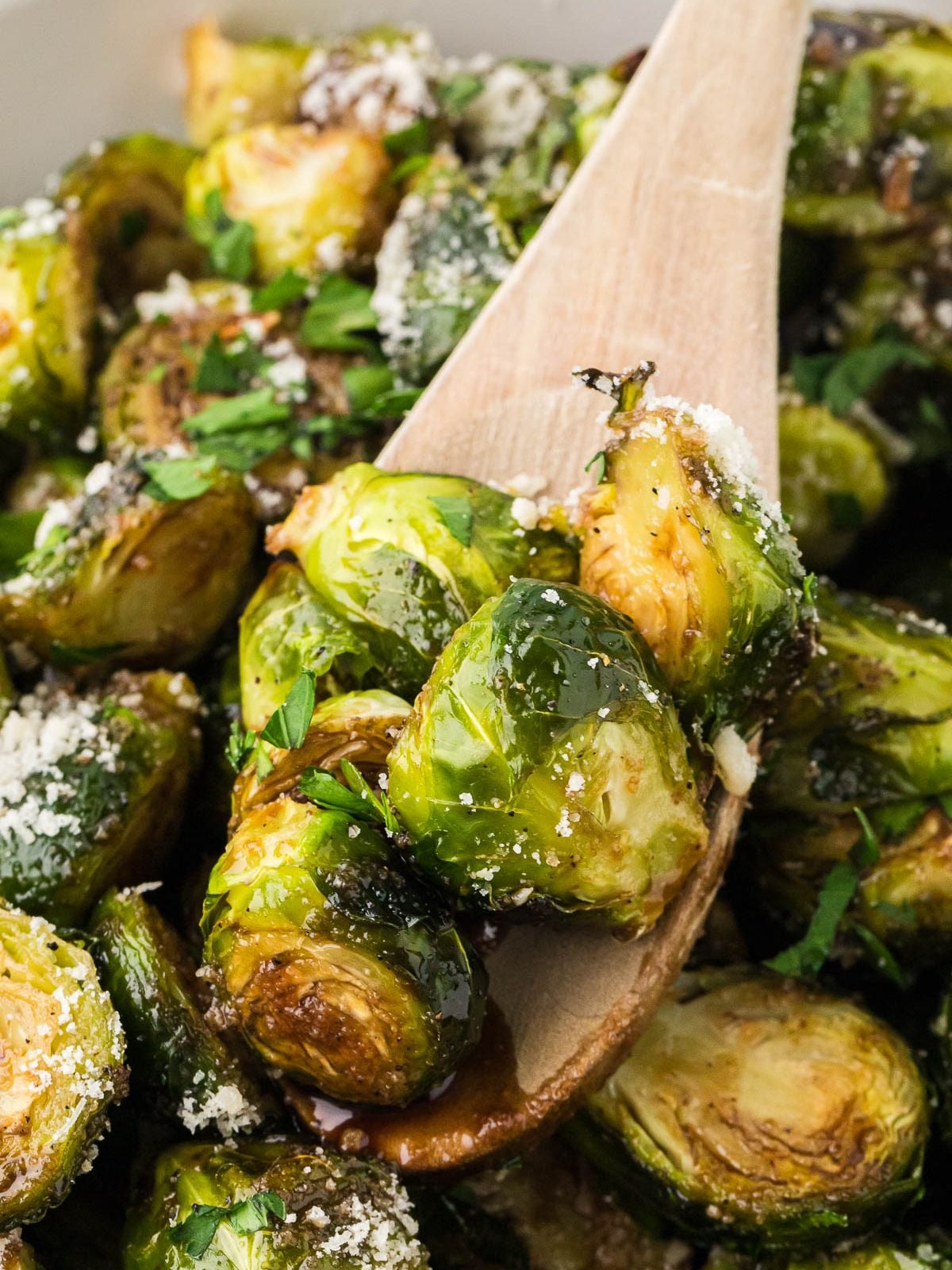
Questions When Making Brussels Sprouts With Balsamic Glaze
Add the glaze after the Brussels sprouts are roasted, just before you serve them. Tossing them with it at the last minute helps preserve more of their roasted texture and keeps the edges crispy.
This recipe uses 425 degrees Fahrenheit for those deeply golden, crispy edges. Ovens fluctuate, though, so if yours runs hot or you don’t want them quite so crispy, you can turn it down to 400 degrees Fahrenheit.
Most restaurants roast or fry their Brussels sprouts at high heat instead of boiling them, and that’s what gives you caramelized edges with tender centers. The browning brings out a nutty sweetness, and you skip the sulfur smell Brussels sprouts get when they cook too long. I roast mine the same way.
If you make this recipe, would you leave a star rating below? It helps other readers find it, and I love hearing how it turned out.
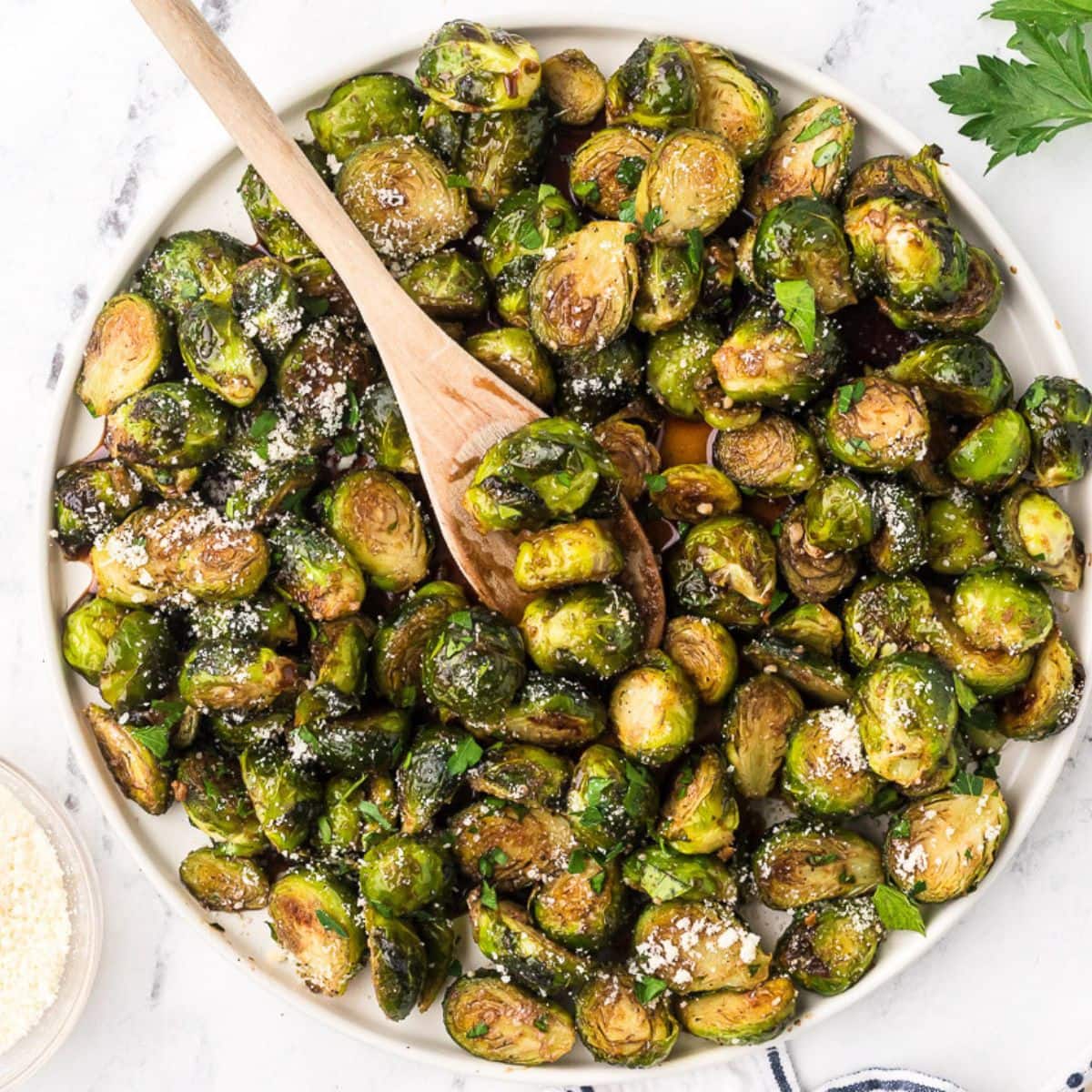

Brussels Sprouts With Balsamic Glaze
Ingredients
For the Brussels Sprouts
- 2 pounds Brussels sprouts, trimmed and halved (about 6 cups)
- 3 tablespoons olive oil
- 1 teaspoon garlic powder
- ½ teaspoon salt
- ¼ teaspoon black pepper
For the Balsamic Glaze
- ¼ cup balsamic vinegar
- 1 tablespoon honey
- 1 tablespoon brown sugar
- ½ teaspoon Dijon mustard
To Finish
- ¼ cup Parmesan cheese, freshly grated
- 2 tablespoons fresh parsley, chopped, for garnish
Instructions
Get Started
- Preheat the oven to 425 degrees Fahrenheit.
- Line a large baking sheet with parchment paper.
- If your baking sheet isn’t large enough to hold all the Brussels sprouts in a single layer, prepare two baking sheets.
Prep the Brussels Sprouts
- Trim the ends of the Brussels sprouts and remove any damaged outer leaves.2 pounds Brussels sprouts
- Cut each sprout in half and place them in a large mixing bowl.

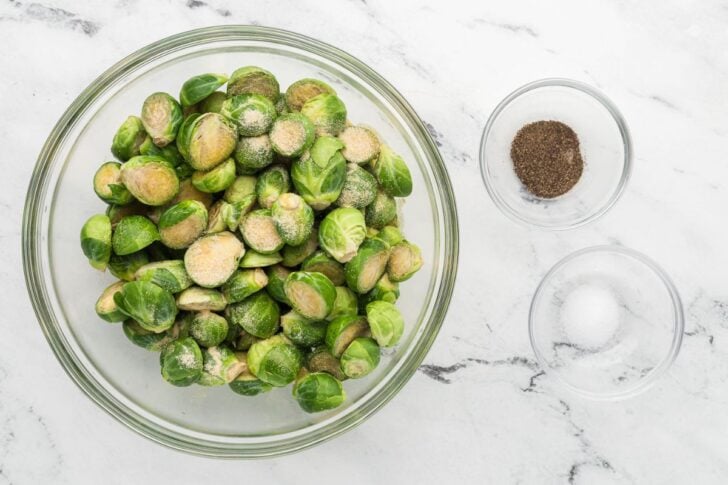
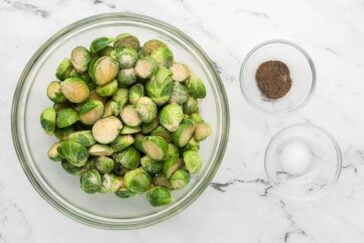
- Add the olive oil, garlic powder, salt, and black pepper.3 tablespoons olive oil, 1 teaspoon garlic powder, ½ teaspoon salt, ¼ teaspoon black pepper
- Toss until the Brussels sprouts are evenly coated.
Roast the Brussels Sprouts
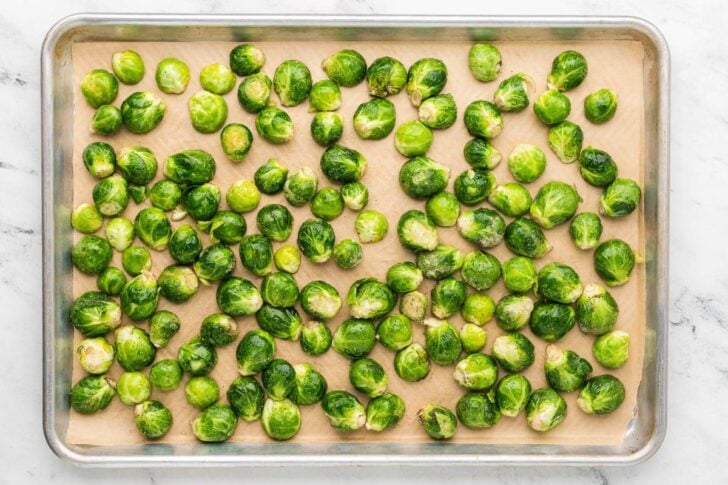
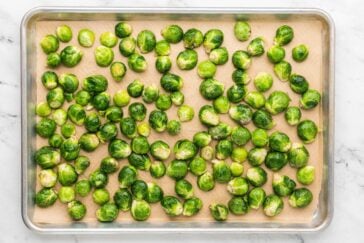
- Arrange the Brussels sprouts cut-side down on the baking sheet, spreading them out in a single layer.
- Roast for about 25 minutes, until the cut sides are deeply golden brown and the centers are tender when pierced with a fork.
- If using two baking sheets, rotate their positions halfway through cooking for more even browning.
Make the Balsamic Glaze
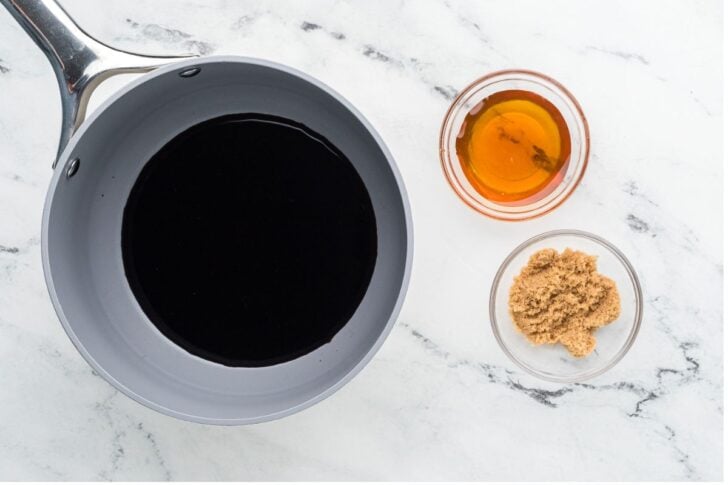
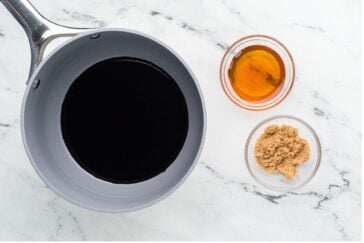
- While the Brussels sprouts roast, combine the balsamic vinegar, honey, brown sugar, and Dijon mustard in a small saucepan.¼ cup balsamic vinegar, 1 tablespoon honey, 1 tablespoon brown sugar, ½ teaspoon Dijon mustard
- Bring to a gentle simmer over medium-low heat, meaning small, slow bubbles rather than a full boil.
- Cook for 3 to 5 minutes, stirring occasionally, until the glaze has slightly thickened and lightly coats the back of a spoon.
- Remove from the heat. The glaze will thicken more as it cools.
Toss and Serve
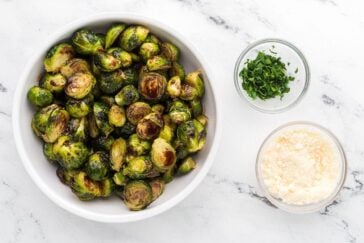
- Transfer the roasted Brussels sprouts to a serving bowl.
- Drizzle the balsamic glaze over the top and gently toss to coat. Add as much or as little glaze as you prefer.
- Sprinkle with the Parmesan cheese and parsley.¼ cup Parmesan cheese, 2 tablespoons fresh parsley
- Serve warm.
Gina’s Notes and Tips
- The edges should be golden brown and caramelized, and the centers should be tender when pierced with a fork.
- Larger Brussels sprouts may need a few extra minutes, so go by the edges and centers rather than the timer alone.
- Use fresh Brussels sprouts. Choose firm sprouts with tightly packed leaves, and try to buy ones that are close to the same size so they cook evenly. Smaller to medium-sized sprouts tend to roast more evenly.
- Don’t overcrowd the pan. Giving the Brussels sprouts room lets them roast and caramelize instead of steaming.
- The balsamic glaze should lightly coat the back of a spoon when it’s ready. Don’t reduce it too much, because it thickens further as it cools.
- For extra-crispy Brussels sprouts, roast them another 3 to 5 minutes before adding the glaze.
- Add the Parmesan while the sprouts are warm. The cheese softens slightly over the top for a savory finish.
- Wash, trim, and halve the Brussels sprouts the night before, then store them in a zip-top bag in the refrigerator.
- Make the balsamic glaze up to 3 days ahead and keep it in a glass jar in the refrigerator.
- Warm the glaze in a small saucepan or the microwave before drizzling, and loosen it with a splash of water if it has thickened too much.
- For the best crispy texture, roast the sprouts shortly before serving.
- Honey: maple syrup works for a slightly different flavor.
- Brown sugar: use additional honey or maple syrup, although the glaze’s flavor and consistency may change slightly.
- Dijon mustard: whole-grain mustard works well.
- Parmesan cheese: Pecorino Romano gives a saltier, sharper flavor. You can also leave the cheese out entirely.
- Olive oil: avocado oil works well for roasting.
- Fresh parsley: fresh thyme is another option.
- Brussels sprouts: fresh is best. If using frozen, thaw completely and pat very dry before roasting, since they hold more moisture and generally won’t get as crispy.
- Store leftovers in an airtight container in the refrigerator for up to 4 days.
- Reheat in a 400 degrees Fahrenheit oven or an air fryer until warmed through. This helps bring back some of the crispiness.
- The microwave works too, but the Brussels sprouts will be softer.
Equipment
Tried this recipe?
Please consider Leaving a Review!Showing Hospitality With Brussels Sprouts With Balsamic Glaze
A Restaurant Night at Home is a fun way to serve these Brussels sprouts, with a few favorite sides passed around the table and a handwritten menu card at every place setting, the kind of small touch that makes your people feel like honored guests. Picture who you’d love to have sitting there, a neighbor you’ve been meaning to invite, friends from church, or the one at your table who usually passes on the vegetables, and imagine how it feels to be handed a plate that was made with them in mind. Romans 15:7 says to welcome one another as Christ has welcomed you, and a table set with care is one of the simplest ways I know to start. Pass the bowl around, leave the dishes for later, and let the conversation keep going. Let your table say what you’d say out loud, that there’s room here for them.