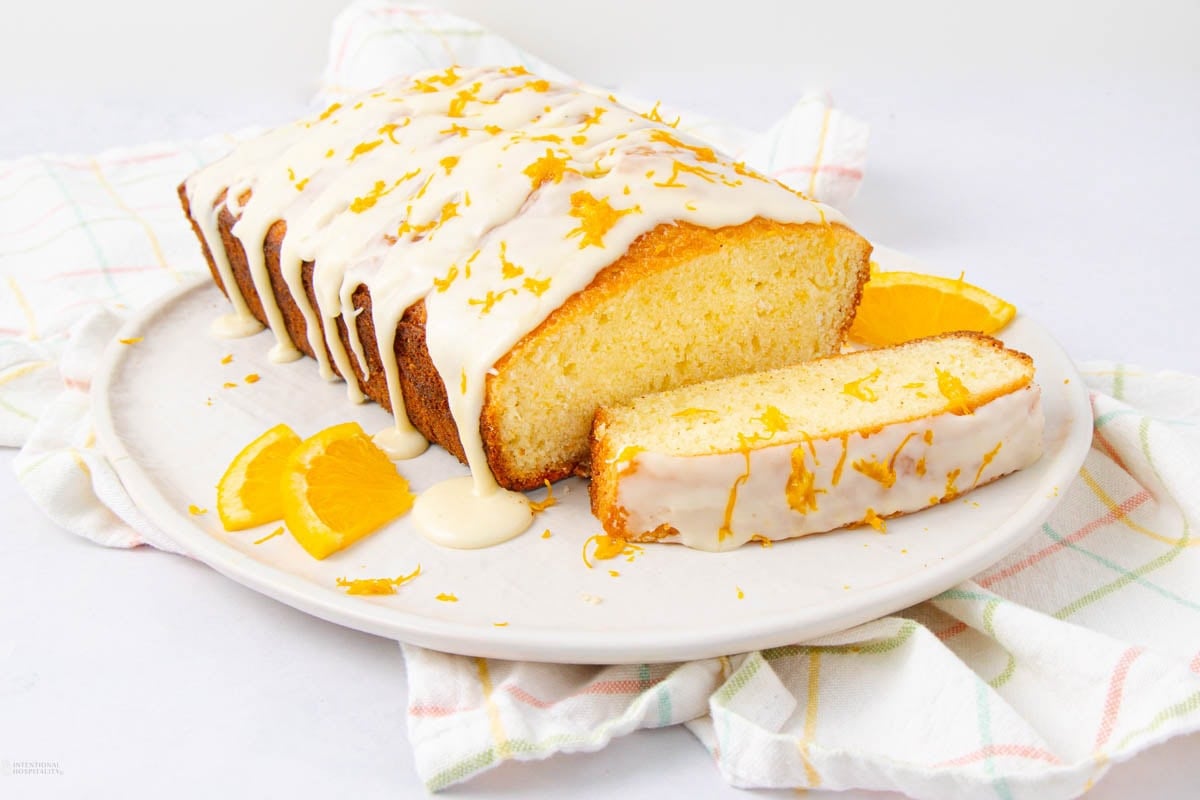


Orange pound cake is the kind of dessert that quietly steals the show before anyone even walks through your front door. As it bakes, the house fills with warm butter and bright citrus, and you know that as soon as you slice into that little orange loaf cake, you’ve got something easy and beautiful to share with the people you love.
I like serving this when friends are dropping by for coffee, when we have overnight guests, or when I need a dessert I can make ahead and carry to church.

Orange Pound Cake
This moist orange pound cake has a delicate, velvety crumb thanks to cake flour and a clever food-processor method, so it tastes like it came from a bakery but is easy enough for a busy week. It has bright, fresh orange flavor from real orange zest and juice, not a bottle, and the simple orange glaze adds just the right amount of sweetness and shine. Because it’s baked in a loaf pan, this fresh orange pound cake is easy to slice, pack, and share, making it perfect for brunch, Bible study, holidays, or just blessing a neighbor with a still-warm slice. Its simplicity and bright flavor make it one of those dessert recipes you’ll want to keep on repeat throughout the year.
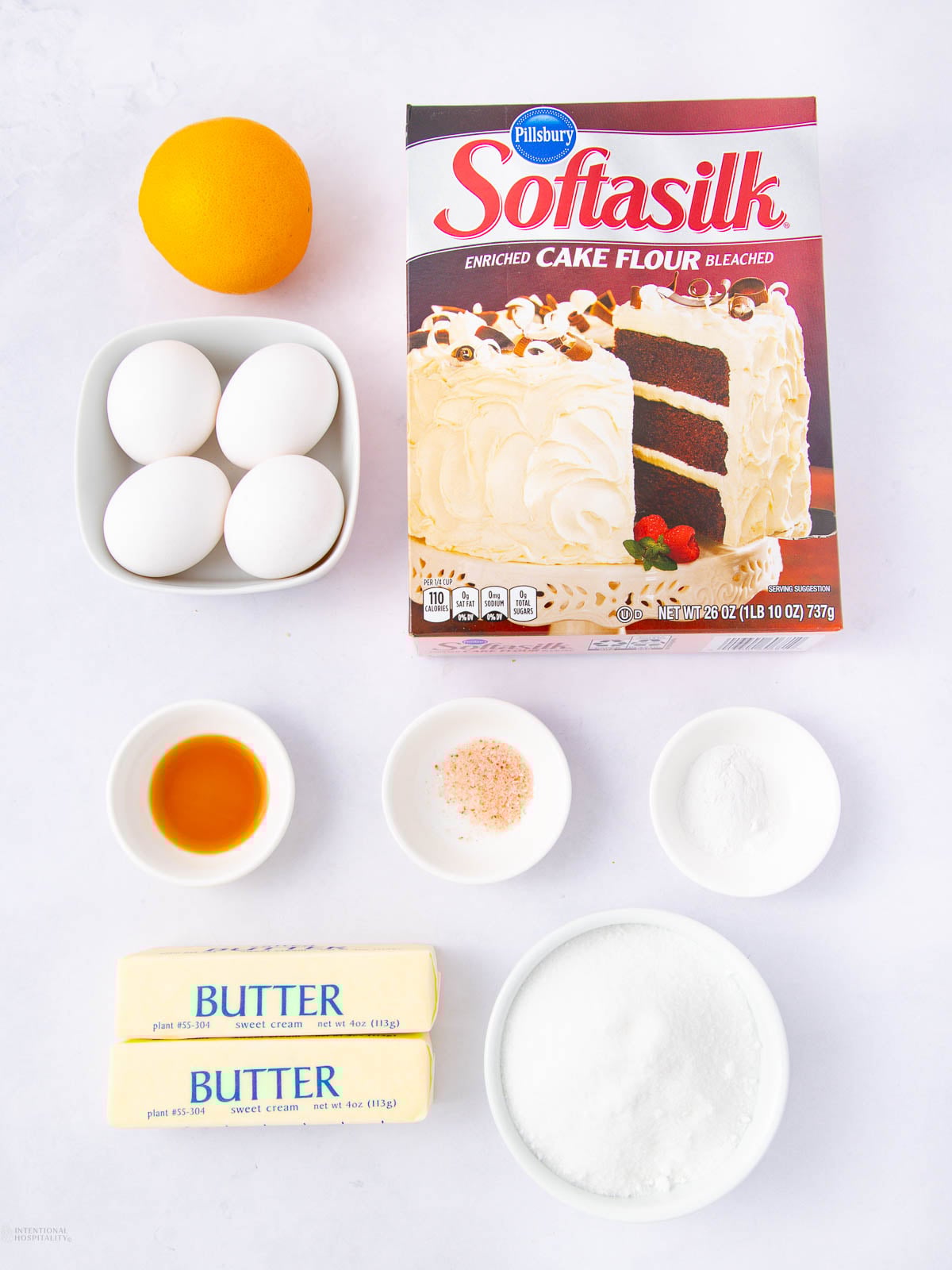
Ingredient Notes
Here’s a quick overview of the key ingredients for this recipe. For the full list of ingredients and exact measurements, be sure to check the recipe card at the bottom of this post.
- Cake flour: If you don’t have cake flour, you can use 1 ½ cups all-purpose flour, remove 3 tablespoons of the flour, and replace those 3 tablespoons with cornstarch. Whisk well before adding. Just know that the texture will be just a bit different.
- Baking powder: Make sure your baking powder is fresh. If it’s been open longer than about 6 months, it may not rise as well.
- Sugar: Stick with regular granulated sugar for the best results. Extra-coarse or “raw” sugar won’t dissolve as easily and can make the crumb feel a little gritty.
- Eggs: Choose large ones. Room temperature eggs blend more easily with the sugar and butter, which keeps the batter smooth and helps the cake bake up evenly.
- Orange zest: Choose firm, heavy oranges with bright, unblemished skin and wash and dry them well. Use a fine grater or microplane and scrape only the colored part of the peel, avoiding the white pith, so the flavor stays bright, not bitter.
- Orange juice: From one large orange, you’ll get enough juice to use 1 tablespoon in the batter and about 2 tablespoons for the glaze. Bottled juice will work in a pinch, but freshly squeezed gives a noticeably fresher taste. If you love orange flavors, you’ll also enjoy my No- Bake Jello Orange Pie and Bakery-Style Orange Cranberry Muffins with Crumb Topping.
- Vanilla extract: Use pure vanilla extract if you can; imitation will work, but the flavor won’t be quite as deep and warm.
- Unsalted butter: Cut it into smaller pieces so it melts quickly and evenly. Heat it just until fully liquid, not bubbling or browned.
- Powdered sugar: Look for “confectioners’ sugar” or 10x sugar on the label. If your sugar looks lumpy, sift it first so the glaze comes together quickly and smoothly.
How To Make Orange Pound Cake
Whisk and Blend
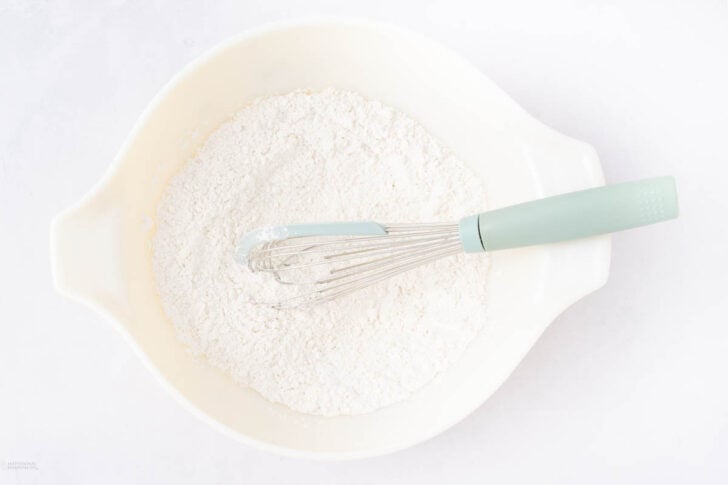
In a medium bowl, whisk together the cake flour, baking powder, and salt until everything looks light and evenly combined.
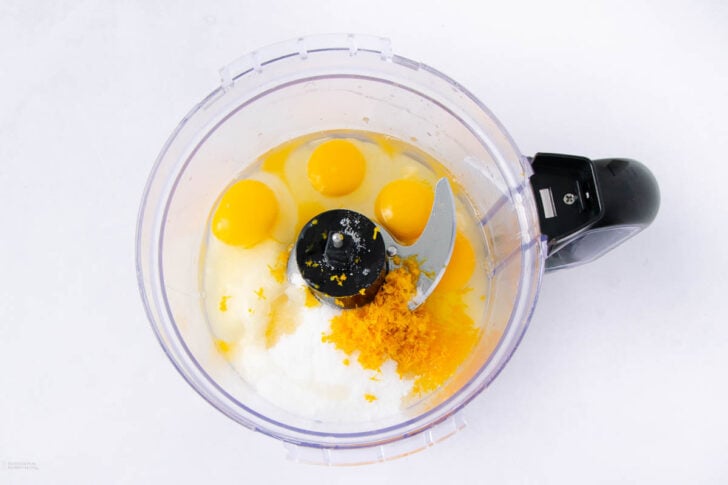
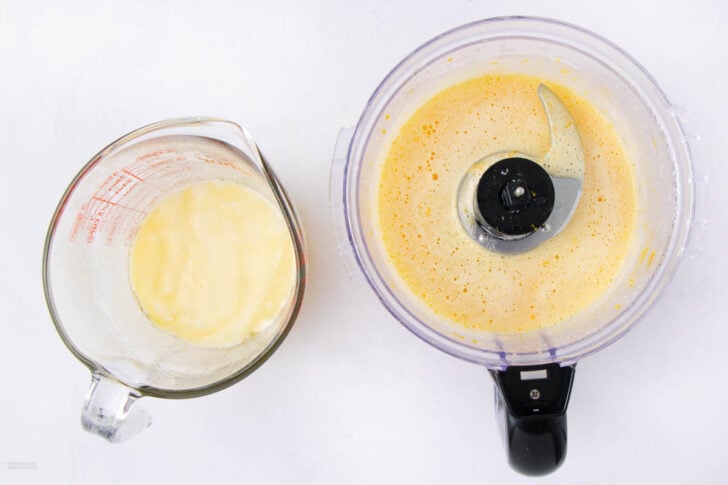
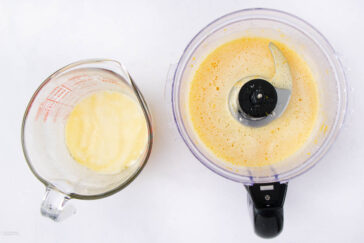
In the bowl of a food processor, combine the sugar, eggs, orange zest, orange juice, and vanilla. Process just until everything looks smooth and a little lighter in color.
Pro Tip: No food processor? Whisk everything together in a large bowl until well combined.
Add Butter
With the food processor running, slowly pour in the hot, melted butter in a thin, steady stream. When fully combined, pour the mixture into a large mixing bowl so you’ll have room to add the flour.
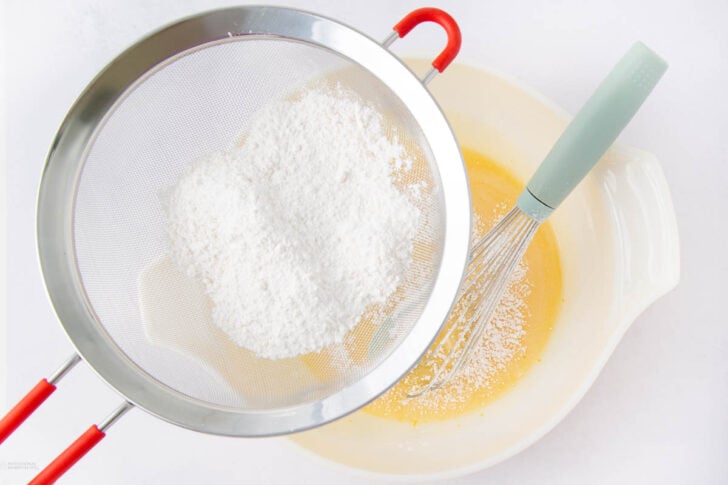
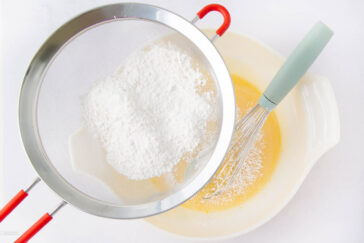
Sift about one-third of the flour mixture over the egg mixture, then gently whisk just until combined. Repeat with the second third, then the final third, whisking after each addition.
Pro Tip: Overmixing at this stage will toughen the crumb. Gentle whisking is the secret to keeping this a truly moist orange pound cake.
Bake, Cool, and Drizzle Glaze
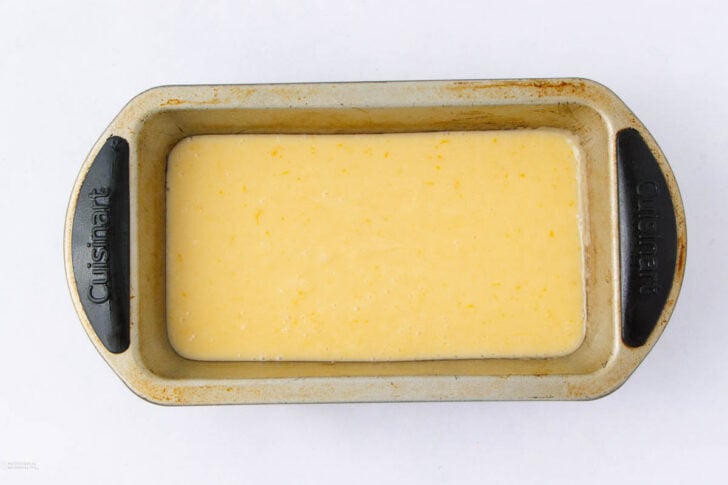
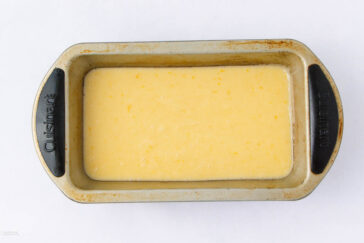
Pour the batter into the prepared pan and smooth the top with a spatula so it bakes evenly. Wipe any drips off the sides of the pan and tap the pan lightly on the counter to release any big air bubbles.
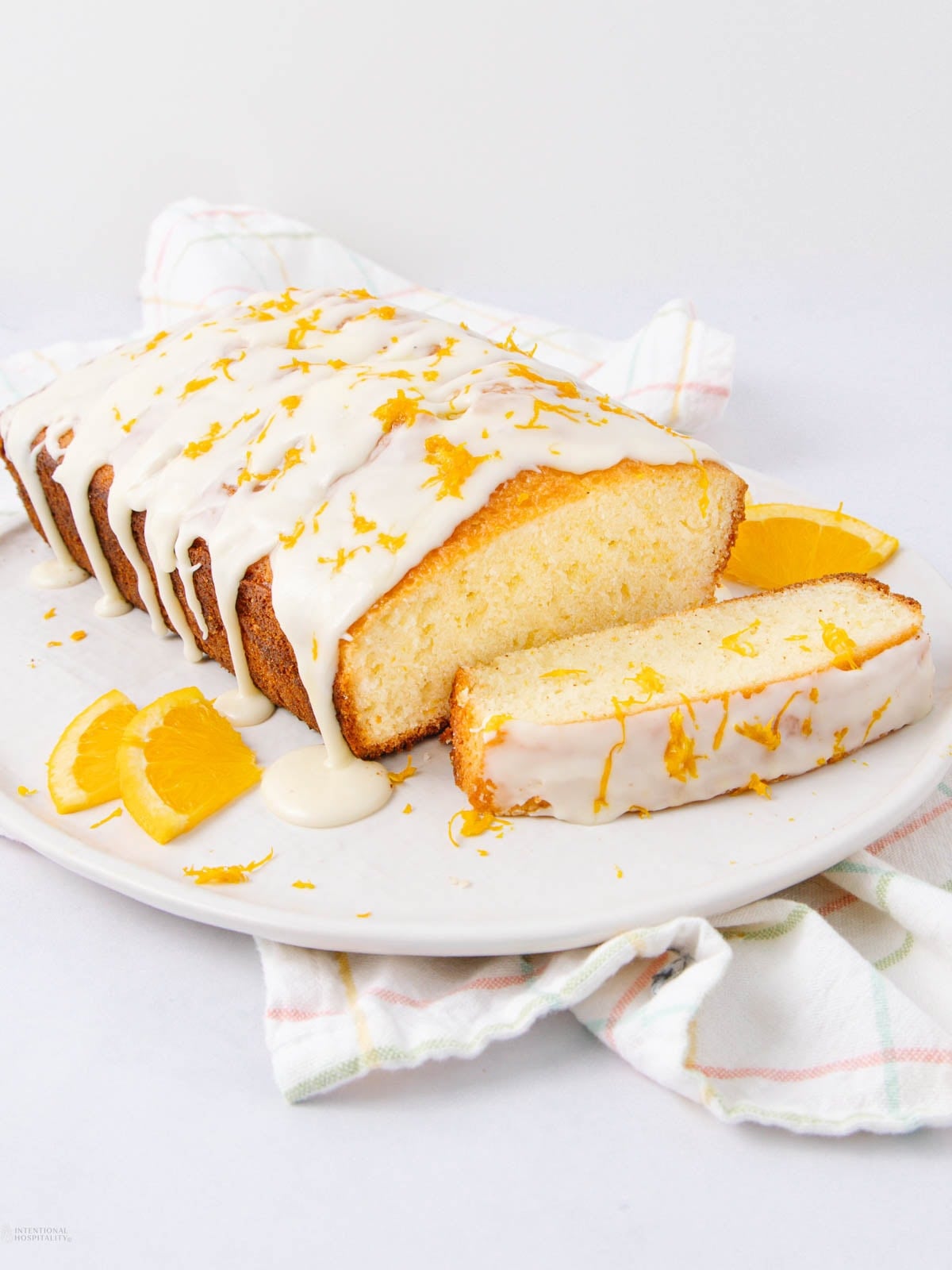
Bake at 350°F for 50 minutes to 1 hour, rotating the pan halfway through, until a toothpick inserted in the center comes out with just a few moist crumbs attached. After baking, allow to cool completely and then drizzle on the glaze.
Pro Tip: If the top browns too quickly, tent the loaf loosely with foil to protect the top while it finishes baking.
Yes, as long as it has a similar volume to your loaf pan and is well greased and floured. The bake time may change slightly, so start checking a little earlier and look for the same visual cues and moist crumbs on the toothpick. The flavor will still be that rich, fresh orange pound cake you like, just in a different shape.
Variations, Substitutions, and Recipe Tips
Flavor Enhancements: Add a pinch of cinnamon or cardamom for a cozy twist, or a little extra vanilla or almond extract for a bakery-style flavor. For a stronger orange taste, add a bit more zest while keeping the juice amount the same.
Add-In Options: Fold in a small handful of mini chocolate chips, dried cranberries, or finely chopped nuts right before the batter goes into the pan. Lightly coat the add-ins with a spoonful of flour from the recipe to help keep them from sinking.
Simple Substitutions: Salted butter can be used with a slight reduction in added salt. You can swap another citrus, like lemon, for the zest and juice to create a different flavor profile. If you enjoy bright citrus flavors, check out these Cool Whip Lemon Cookies with Just 4 Ingredients and Creamy Cake Mix Lemon Bars with Buttery Crust.
Tips For Recipe Success: Mix gently after the flour goes in, and stop as soon as the batter is mostly smooth to keep the texture tender. Check the loaf a few minutes before the bake time so you do not accidentally overbake. Are you a fan of classic Southern pound cakes? You’ll enjoy my Augusta National Sour Cream Pound Cake, a rich, buttery favorite that’s stood the test of time.
Hospitality Challenge
After church, invite a few people back to your home for a simple dinner. Serve easy dishes like Crock Pot Lemon Chicken with Garlic Cream Sauce alongside a quick side such as Easy Fresh Green Beans and Mushrooms, then finish the meal with your orange pound cake with glaze and a pitcher of chilled Smooth Southern Sweet Tea. Before you eat, invite each guest to share one way they saw God’s kindness this week and offer to pray for needs by name. Live out 1 Peter 4:9 (ESV): “Show hospitality to one another without grumbling,” letting your table be a place of joy, laughter, and encouragement. Send everyone home with a wrapped slice of cake and a small written blessing to carry the warmth and comfort of Christ into their week.
More Easy Cakes to Brighten Your Table
- Easy Pineapple Upside Down Cake with Cake Mix
- Easy Gingerbread Cake Mix Recipe In A Jar
- Easy No-Bake Strawberry Angel Food Cake
- Moist Pumpkin Spice Cake From Cake Mix (With Cream Cheese Frosting)
- Creamy Tiramisu Dessert Cake That Always Steals the Show
This fresh orange pound cake is a stress-free dessert you can bake ahead, slice easily, and set out with pride for brunch or any cozy gathering. If you have any questions about making this recipe, feel free to ask in the comments below. I’m here to help!


Moist Orange Pound Cake with Fresh Citrus Glaze
Ingredients
Pound Cake
- 1 ½ cups cake flour
- 1 teaspoon baking powder
- ½ teaspoon salt
- 1 ¼ cups sugar
- 4 large eggs, room temperature
- 1 tablespoon grated orange zest plus 1 tablespoon juice
- 1 ½ teaspoons vanilla extract
- 16 tablespoons unsalted butter, melted and hot
Glaze
- 2 tablespoons orange juice
- 1/2 cup powdered sugar
- Instructions
Instructions
Prepare the Pan and Dry Ingredients
- Adjust oven rack to the middle position and heat oven to 350 degrees Fahrenheit.
- Grease and flour an 8½ by 4½ inch loaf pan.
- Whisk the cake flour, baking powder, and salt together in a bowl.
Process the Wet Ingredients
- Process the sugar, eggs, orange zest, orange juice, and vanilla in a food processor until combined.
- With the processor running, add the melted butter in a steady stream until incorporated.

- Pour the mixture into a large bowl.
Combine the Batter
- Sift the flour mixture over the egg mixture in three additions, whisking to combine after each addition until only a few streaks of flour remain.
- Whisk gently until almost no lumps remain.
Bake the Cake
- Transfer the batter to the prepared pan and smooth the top.
- Wipe any batter from the sides of the pan and gently tap the pan on the counter to release air bubbles.
- Bake until a toothpick inserted in the center comes out with a few moist crumbs attached, 50 minutes to 1 hour, rotating the pan halfway through.
Cool the Cake
- Let the cake cool in the pan on a wire rack for 10 minutes.
- Run a small knife around the edge to loosen, then flip the cake out onto a wire rack.
- Turn the cake right side up and let cool completely, about 2 hours.
Glaze
- Whisk together the orange juice and powdered sugar in a small bowl. Whisk until smooth. Note, you might need to add a bit more powdered sugar to get the thickness of the glaze to your liking.
- Drizzle glaze on top of the pound cake.
Gina’s Notes and Tips
- Room Temperature: Once the glaze is set, store the orange pound cake at room temperature in an airtight container or wrapped in plastic wrap. It will stay fresh for about 2 to 3 days.
- Fridge: Wrap the cake well so it doesn’t pick up any other flavors from the fridge. Keep it there for up to 4 to 5 days. Let slices sit at room temperature for 20 to 30 minutes before serving.
- Freezer: Freeze the whole loaf or individual slices tightly wrapped in plastic and then in foil or a freezer bag for up to 3 months. Thaw in the fridge or at room temperature before serving.
Tried this recipe?
Please consider Leaving a Review!