


Turkey dry rub is the easiest way I know to give a holiday bird deep golden skin and plenty of flavor without fooling with a messy wet brine. This homemade dry rub for turkey starts with dried thyme, rosemary, sage, and marjoram ground fine in a spice grinder, then gets stirred into brown sugar, paprika, garlic powder, onion powder, salt, and pepper, so it tastes savory and herby with just a touch of sweetness. It works on a smoked turkey or an oven-roasted one, and the brown sugar caramelizes the skin to a beautiful golden brown. One batch makes about 1/2 cup, enough to season a 12- to 15-pound turkey, and it keeps in a jar for up to three months, so you can mix it up well before Thanksgiving or Christmas.

One year, I decided I wanted to make our turkey a little bit more special, so I blended my own turkey seasoning. We had quite a few dried herbs from our garden, like thyme and rosemary, and it was an easy thing to do. I just pulled out the spice grinder I set aside for herbs instead of coffee (you’ll see it in the photos below with HERBS written right on the side) and whipped it together. This rub has been on our smoked turkey for the past seven years now. Our family is so big these days that we always have to cook two turkeys, and the smoked one is one of our favorites.
Main Ingredients Needed For Turkey Dry Rub
Here’s a quick overview of the key ingredients for this recipe. For the full list of ingredients and exact measurements, jump to the recipe card.

- Brown Sugar: This is what gives you that golden skin. The sugar caramelizes as the turkey cooks, especially over a long smoke. If your brown sugar has hardened into lumps, break them up with a fork before you measure so it mixes evenly with the spices.
- Paprika: Paprika gives the rub its warm color. I use smoked paprika when I’m roasting a turkey in the oven or cooking a turkey breast in the crock pot, and I switch to regular sweet paprika when the turkey is going on the smoker, since the wood already brings plenty of smoke.
- Dried Thyme and Dried Rosemary: These two are the backbone of the blend, and they’re the herbs I first pulled from our own garden for this rub. If you’re buying them, look for dried herbs that still look green and smell fragrant when you open the jar. If they’ve gone gray and dusty, they’ve lost most of their flavor.
- Sage: Sage is the flavor that tastes like Thanksgiving. You can use ground sage from the store and stir it right into the bowl, or grab whole dried sage leaves and grind them with the other herbs. Either way works.
- Dried Marjoram: Marjoram is a little milder and sweeter than oregano, and it rounds out the stronger herbs. You’ll usually find it on the spice aisle right next to the oregano.
- Garlic Powder and Onion Powder: These add the savory depth that keeps the rub from tasting like just herbs and sugar. Go for fine-textured powders rather than granulated so they blend evenly with everything else.
How To Make Turkey Dry Rub
This homemade turkey rub is just two quick steps, one in a bowl and one in the grinder.

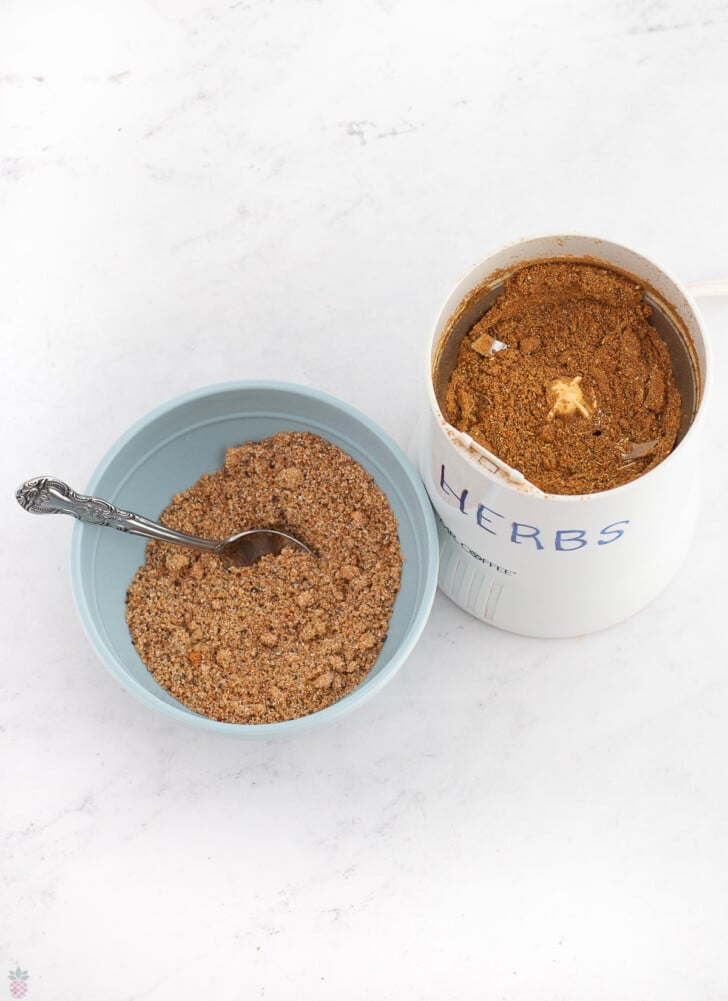
Tip: I keep one coffee grinder just for herbs and spices. After each batch, I gently wipe it out with a damp towel and dry it well so the flavors don’t carry over into the next thing I grind.
How To Dry Rub a Turkey
Once the rub is mixed, here’s how much to use and how I get it onto the bird.
How Much Rub To Use
- Turkey up to 12 pounds: 5 to 6 tablespoons
- Turkey 12 to 15 pounds: about 7 tablespoons, just under one batch
- Whole turkey breast: 1 to 2 tablespoons
- Turkey legs or wings: 1 to 2 teaspoons per piece
It’s the same rub I reach for on my slow cooker turkey wings, too.
Prep and Season the Turkey
- Start with a fully thawed turkey.
- Pat it dry with paper towels to remove moisture. This helps the seasoning stick and the skin crisp.
- Loosen the skin by gently separating it from the meat with your fingers to make small pockets.
- Season under the skin, rubbing the seasoning right onto the meat for deeper flavor.
- Season the outside, massaging the rest of the rub over the skin, wings, and legs.
Then slide the turkey into the fridge uncovered to rest before it cooks (more on how long below). If you’d rather go the wet-brine route this year, my apple cider turkey brine is the one to try.
Using It on a Smoked Turkey
This is the dry rub for smoked turkey that’s been on our table for seven years. I use hickory or apple wood, and I swap in regular sweet paprika since the wood already brings the smoke. The brown sugar caramelizes over the long smoke and turns the skin a perfect golden brown.
Using It on an Oven-Roasted Turkey or Turkey Breast
For a turkey in the oven, or a crock pot turkey breast, I go back to smoked paprika for that hint of smokiness. Season it the same way, under the skin and over the top, then cook it the way you normally would.
Making This Turkey Seasoning Recipe Ahead
This turkey seasoning recipe is one of my favorite things to get done early, because it’s one less job during the busiest cooking week of the year. Mix it up a few weeks before Thanksgiving, pour it into an airtight jar, and write the date on the lid so you always know how fresh it is. It keeps up to three months in a cool, dry spot, which means a batch made in early November will still be good for Christmas dinner. If you’re cooking two turkeys, make both batches at the same time and store them in separate jars so they’re ready to grab.
Questions When Making Turkey Dry Rub
For our family, it’s this one. It’s a homemade blend of thyme, rosemary, sage, and marjoram with brown sugar and paprika, and I’ve used it on our smoked turkey for the past seven years. The brown sugar gives the skin its color, and grinding the dried herbs into a fine powder lets them blend evenly with the sugar and spices.
This turkey dry rub works on a smoked turkey breast too, just swap the smoked paprika for regular sweet paprika since the smoker already adds plenty of smoke. Use about 1 to 2 tablespoons for a whole breast, rubbed under the skin and over the top.
Overnight is best. I aim for 12 to 24 hours in the fridge, uncovered, which gives the salt time to season the meat and lets the cold air dry out the skin so it turns golden and crisp. If you’re short on time, even 2 to 4 hours helps, and you can always rub it on right before the turkey goes in.


Turkey Dry Rub
Ingredients
- 2 tablespoons brown sugar
- 2 teaspoons smoked paprika, use regular sweet paprika when smoking the turkey
- 1 tablespoon thyme, dried
- 1 tablespoon rosemary, dried
- 2 teaspoons sage, store-bought ground sage, or whole dried leaves ground in the spice grinder
- 2 teaspoons marjoram, dried
- 1 teaspoon garlic powder
- 1 teaspoon onion powder
- 2 teaspoons black pepper
- 2 teaspoons kosher salt, Pink Himalayan salt is also a great option for this rub recipe
Instructions
- In a small bowl, mix the brown sugar, paprika, garlic powder, ground sage, onion powder, salt, and pepper.2 tablespoons brown sugar, 2 teaspoons smoked paprika, 2 teaspoons sage, 1 teaspoon garlic powder, 1 teaspoon onion powder, 2 teaspoons kosher salt, 2 teaspoons black pepper

- In a small coffee grinder, add the dried thyme, rosemary, and marjoram (plus the sage, if using whole dried leaves). Pulse the grinder a few times to finely chop the dried herbs to make a fine powder.1 tablespoon thyme, 1 tablespoon rosemary, 2 teaspoons marjoram
- Combine the herbs ground in the spice grinder with the other spice powders in the bowl. Stir well to combine all the ingredients.
- Store the spice rub in an airtight container or jar until you are ready to use it.


Gina’s Notes and Tips
- How Much to Use: One batch seasons a 12- to 15-pound turkey (about 7 tablespoons). Use 5 to 6 tablespoons for a turkey up to 12 pounds, 1 to 2 tablespoons for a whole turkey breast, or 1 to 2 teaspoons per leg or wing.
- Storage: Store in a sealed jar or container at room temperature for up to 3 months. Label your spice jars with the date made so you always know what’s fresh.
Equipment


Tried this recipe?
Please consider Leaving a Review!Showing Hospitality With Homemade Turkey Rub
A Grilling Out Night is the perfect excuse to pull the smoker out a few weeks before Thanksgiving and invite another family over to smoke a turkey together, so nobody’s first smoked turkey has to happen on the big day with the whole family watching. Mix up the rub the night before, let the turkey rest in the fridge overnight, and once it’s on the smoker, the whole afternoon opens up for lawn chairs, a pot of coffee, and a few sides everybody brings from home, like a pan of cornbread dressing with sausage. Make an extra batch while you’re at it and send a little jar home with each family, since it’s one of the easiest ways I know to let people take a piece of the day with them. Acts 2:46 talks about the early church breaking bread in their homes and eating with glad and generous hearts, and I think a slow afternoon around a smoker with people you love is a pretty good picture of that. Nobody’s rushing, nobody’s stuck in the kitchen, and that unhurried kind of time is usually where the real conversations happen.
Hi, Gina! What happens to the turkey once I have rubbed your spice rub all over it?? Do I put it in the fridge for 8hours ahead of cooking? Do I cover it? Or not? I would love a few more details as to what is next! Thank you!
Kathy
Chandler, Az
Kathy, I just added tips for preparing your turkey meat for a dry rub, how to apply it and how long to allow it to infuse the seasoning. Hope you enjoy!
Hi, Gina! Thank you so much for your response to my question about the turkey rub and how to apply it! I am anxious to try it and will let you know how it tasted!
Thanks, again!
Kathy