


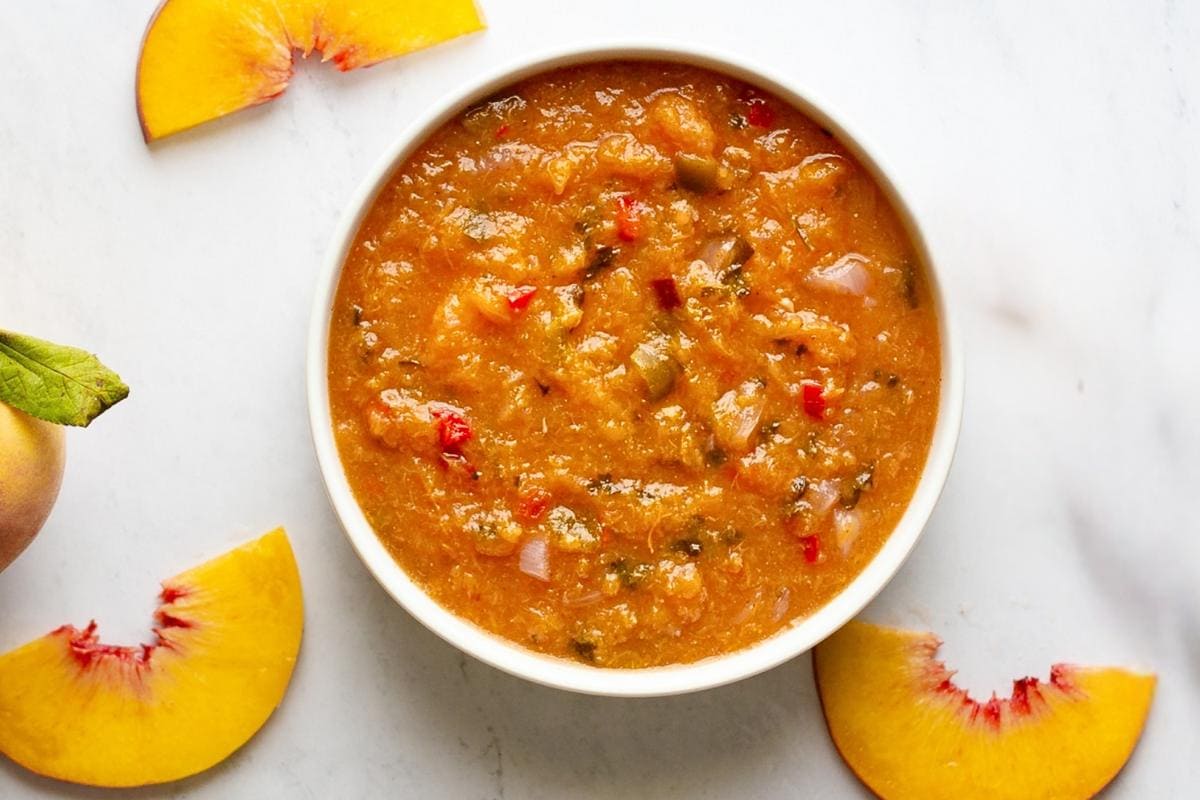
This peach salsa recipe for canning is a sweet and spicy way to preserve fresh peaches in half-pint jars using a simple water bath method, no pressure canner needed. It’s a classic recipe for canning peach salsa filled with juicy peaches, red onion, jalapeno, and cilantro, cooked down until it’s just thick enough to scoop up with a chip. It’s sweet from the peaches with just enough jalapeño heat to keep things interesting, and the cilantro keeps it tasting fresh instead of syrupy. If you’ve got more peaches than you know what to do with, this is the recipe that puts them to good use for months to come.
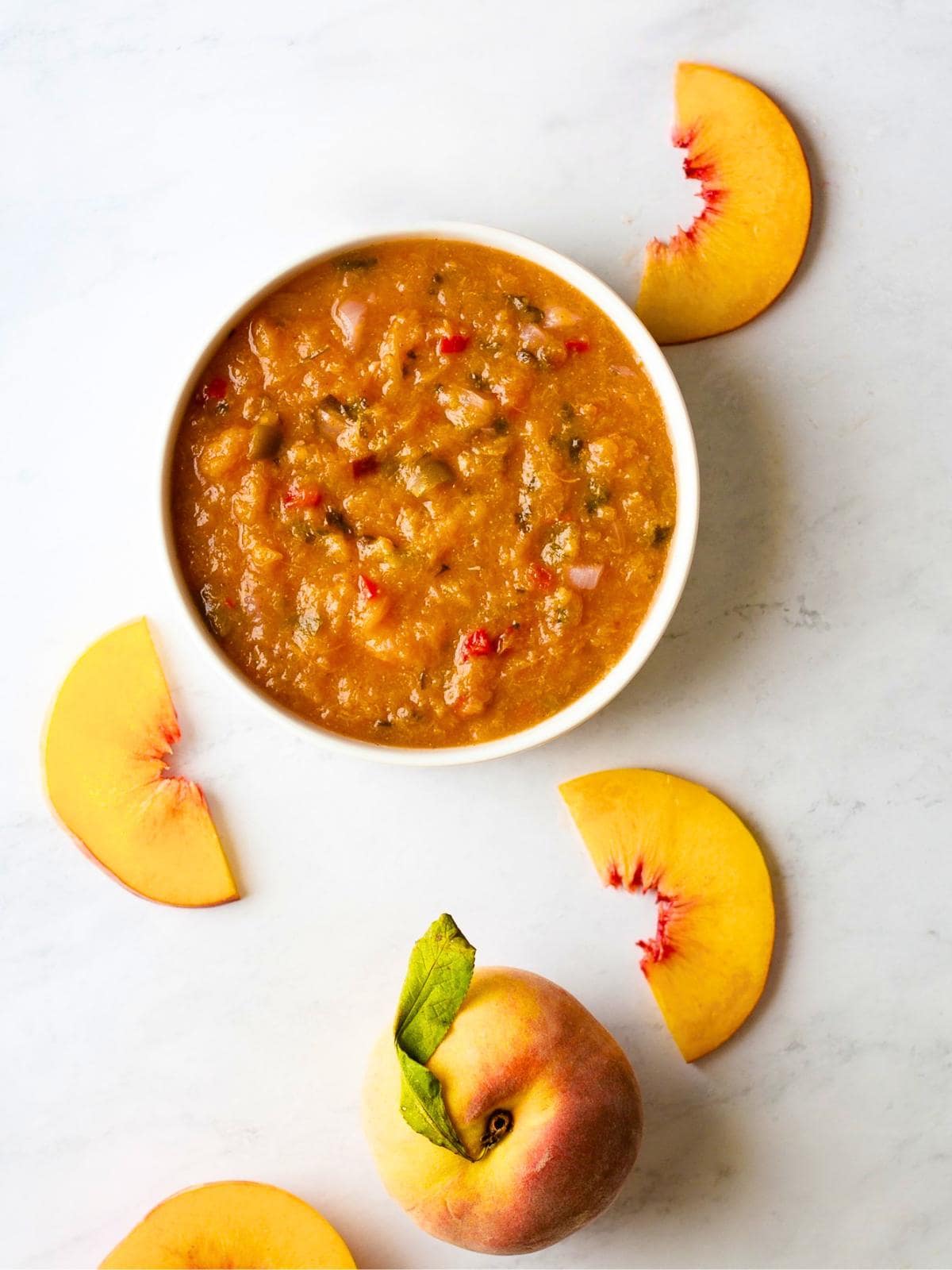
One summer, I had more peaches than I knew what to do with, so I started looking for a new way to preserve them. I found a recipe in my canning book for peach salsa and thought I would give it a try. My whole family loved it, so much so that they went through a whole jar scooping chips while testing it.
Now we make a few batches every peach season to have in our pantry. We enjoy spooning it over our grilled chicken or fish, but honestly, most of it disappears when poured into a salsa bowl with a bag of chips.
Ingredients Needed for Peach Salsa Recipe for Canning
Here’s a quick overview of the key ingredients for this recipe. For the full list of ingredients and exact measurements, jump to the recipe card.
- White vinegar: This is what makes the water bath method safe for canning; it keeps the acidity where it needs to be. Stick with plain white vinegar here; it’s the mildest option that still does the job right.
- Peaches: You’ll want them ripe, fresh, and peeled. I tried leaving the skins on for one year to save myself a step, and peeling them really does make for a better salsa. The texture comes out so much smoother. If you’re short on peaches, you can swap in chopped, pitted, peeled apricots for up to 1 cup of the total.
- Red onion: Finely chopped, it adds that little bite that balances out the sweetness of the peaches.
- Jalapeno peppers: This is where the spice comes from. Chop them fine, and wear gloves if your skin’s sensitive; that oil lingers longer than you’d think.
- Red bell pepper: Seeded and chopped, it adds color and a little sweetness of its own without adding heat. If peppers end up being your next canning project, I walked through canning roasted peppers step by step in another post.
- Cilantro: Loosely packed and finely chopped, it’s what makes this taste like a real salsa instead of just sweet peaches in a jar.
- Honey: A little liquid sweetener to round out the flavor. Liquid honey blends in more easily than the thick kind straight from the jar.
- Garlic: Just one clove, finely minced, makes a real difference in rounding out the flavor.
- Ground cumin and cayenne pepper: These bring the warmth that makes this taste like a true salsa and not just a fruit spread.
How To Make Peach Salsa Recipe for Canning
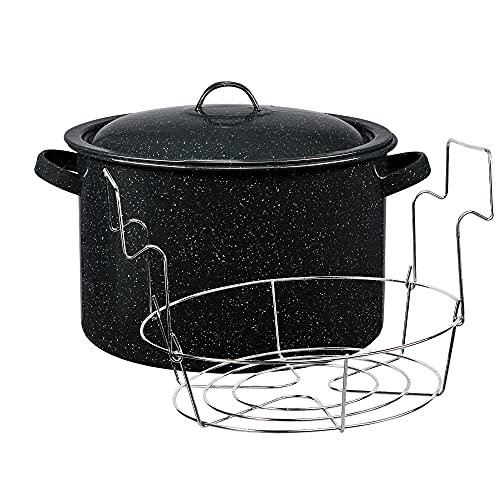
Get your canner, jars, and lids ready first; that way, everything moves quickly once your salsa starts cooking. If you’re new to this method, my water bath canning for beginners guide walks through the basics before you start.
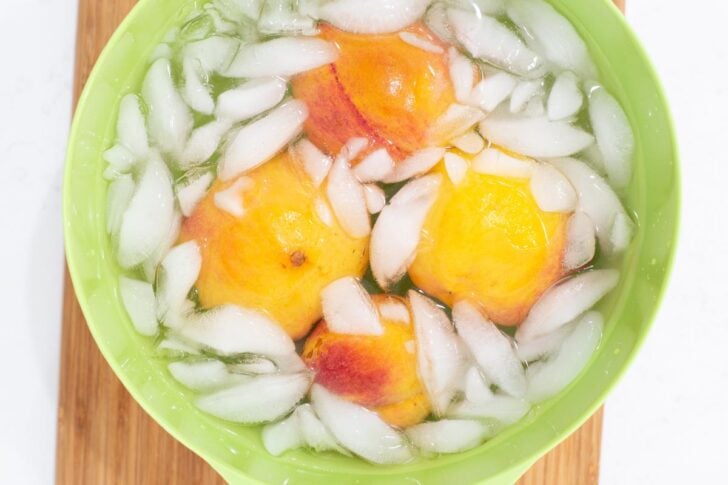
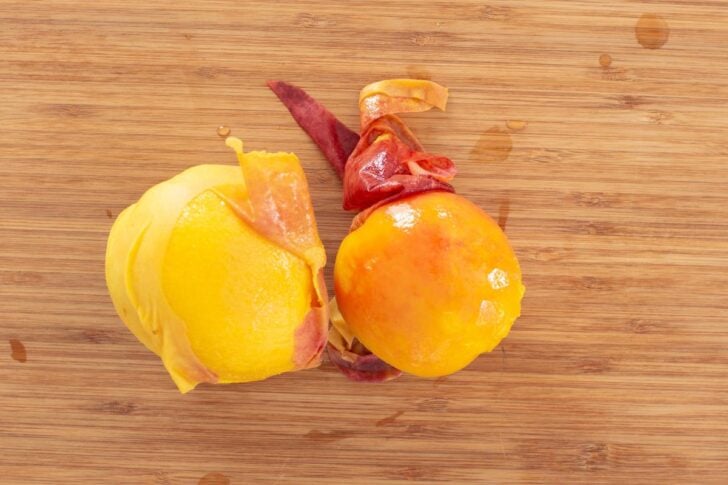
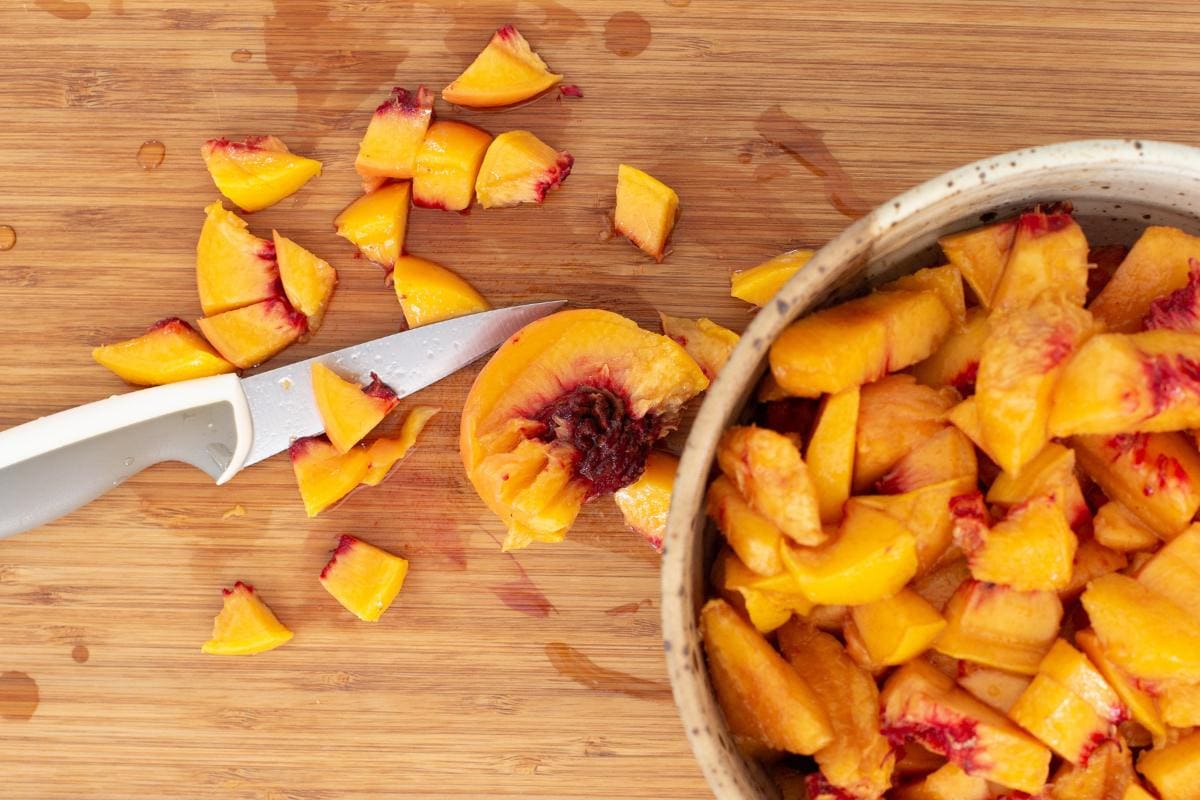
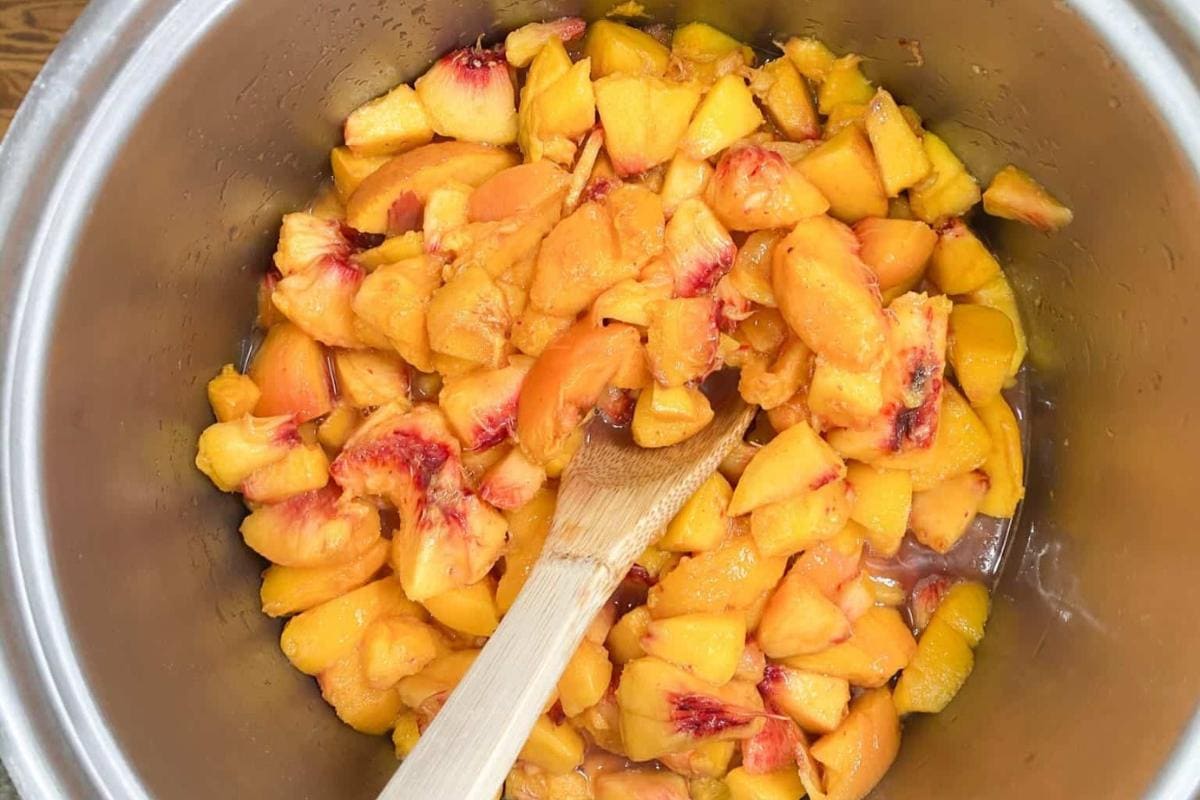
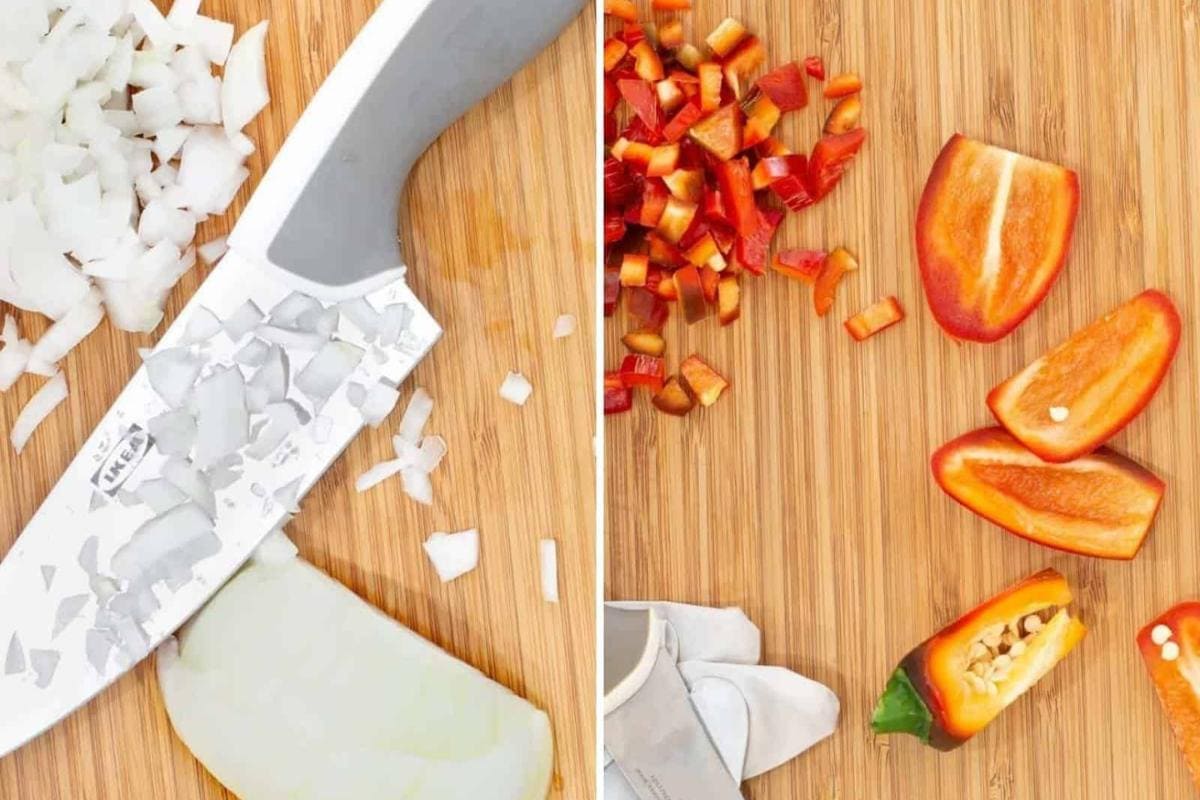
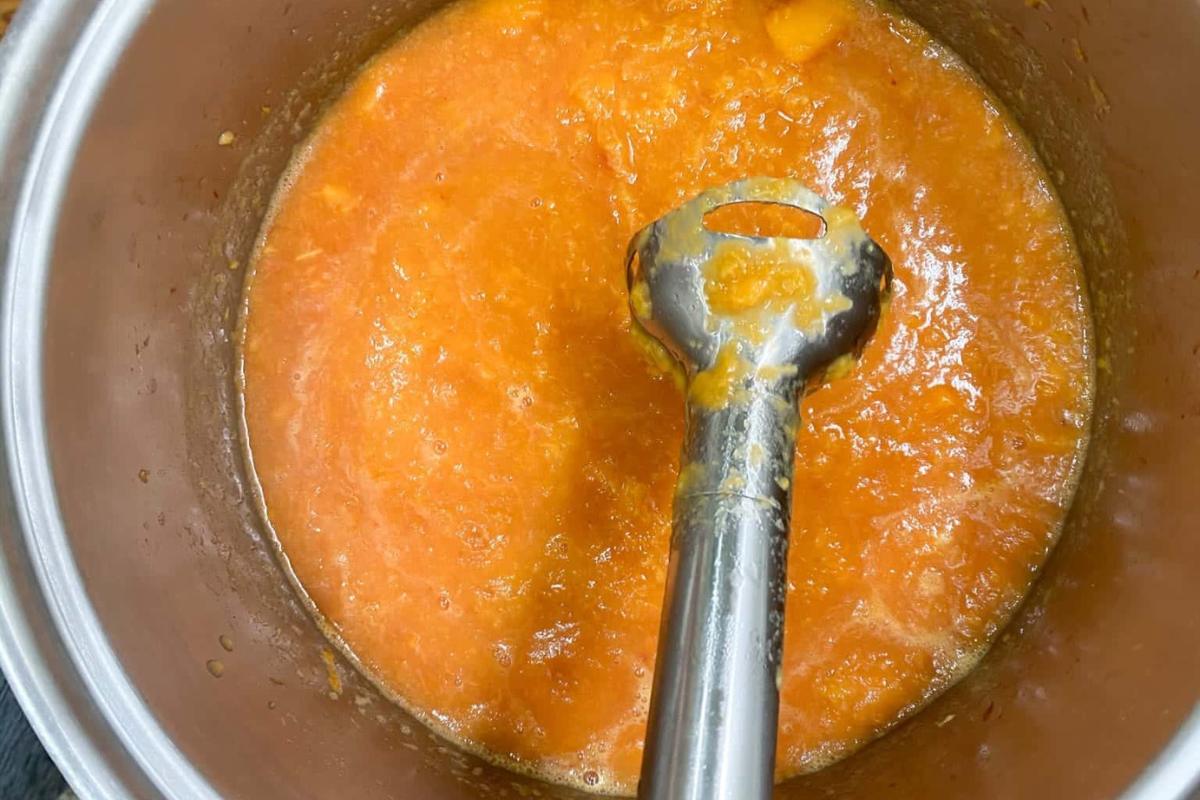
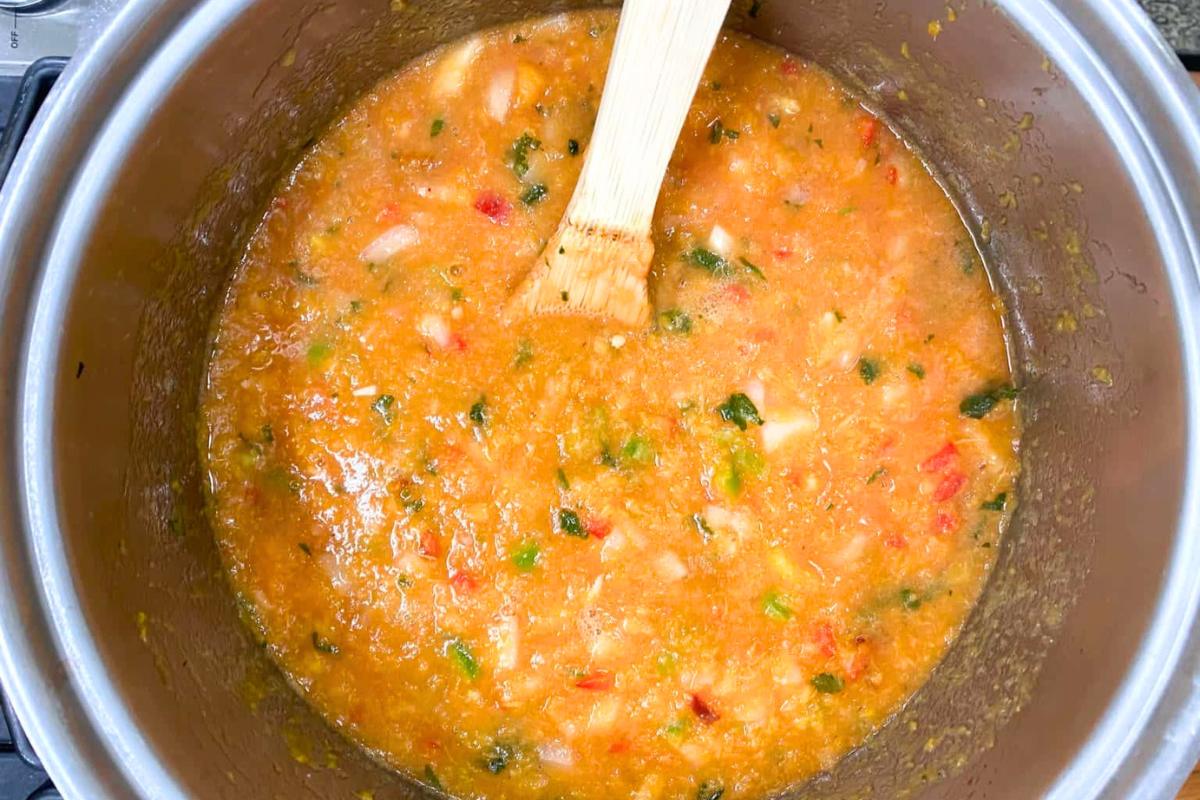
Tip: This recipe is tested for eight half-pint jars only. I stick to that size because half-pint jars are the only tested, safe option I’ve found for this recipe in my Ball canning book, and I use only canning practices confirmed safe by Ball or the National Center for Home Food Preservation. Don’t can it in pint or quart jars; the processing time hasn’t been tested for those larger sizes.
Peach Salsa Recipe for Canning Variations
This peach salsa canning recipe leaves plenty of room to make it your own.
- If you find yourself short on peaches, you can swap in chopped, pitted, peeled apricots for up to 1 cup of the peaches called for, and it still turns out great.
- I tried this one year with serrano peppers instead of jalapeños, and it came out way too spicy for us. Jalapeños really are the right amount of heat for this recipe unless you like it spicy.
- If you love a canning project like this one, you might also like my canning cherry tomato salsa. It uses a similar water bath method with a completely different flavor.
Favorite Canning Supplies
Questions When Making Peach Salsa Recipe for Canning
No, this is a water bath canning recipe, not a pressure canning one. The vinegar keeps the acidity in a safe range for water bath processing, so a pressure canner isn’t necessary here.
Sealed jars keep for up to 1 year when stored in a cool, dark place away from temperature swings. Once you open a jar, refrigerate it and use it up within a few days.
No, it’s best to make separate batches of the tested amount rather than doubling it. Doubling a canning recipe changes how the heat and acid move through the mixture, so it’s safer to run it twice at the tested size than to scale it up in one batch. Many times, I have several pots on my stove at once to fill my canner.

Peach Salsa Recipe For Canning
Ingredients
- 1/2 cup white vinegar
- 6 cups chopped, pitted, peeled peaches
- 1 1/4 cups red onion, finely chopped
- 4 jalapeno peppers, finely chopped
- 1 red bell pepper, seeded and chopped
- 1/2 cup cilantro, loosely packed finely chopped
- 2 tablespoons liquid honey
- 1 clove garlic, finely minced
- 1 1/2 teaspoons ground cumin
- 1/2 teaspoon cayenne pepper
- 2 teaspoons salt
Instructions
Prepare the Canner and Jars
- Prepare your canner, jars, and lids according to standard canning procedure.
Cook the Salsa
- In a large stainless steel saucepan, combine the vinegar and peaches.
- Add the onion, jalapeno peppers, red pepper, cilantro, honey, garlic, cumin, cayenne, and salt.
- Bring to a boil over medium-high heat, stirring constantly.
- Reduce the heat and boil gently, stirring frequently, until slightly thickened, about 5 minutes.
Remove from heat.
Fill and Process the Jars
- Ladle the hot salsa into hot jars, leaving 1/2 inch of headspace.
- Remove air bubbles and adjust headspace if needed by adding more hot salsa. Wipe the rim clean.
- Center a lid on each jar and screw the band down until you feel resistance, then increase to fingertip tight.
- Place the jars in the canner filled with water, making sure they are completely covered with water.
- Bring to a boil. Once the water is boiling, process for 15 minutes.
- Remove the canner lid, wait 5 minutes, then remove the jars. Let cool on a kitchen towel for 24 hours.
- Remove the rings and check that the jars are sealed properly. Write the name and date on the lids and store in a cool, dry place for up to one year.
Gina’s Notes and Tips
- Storage: Store sealed jars in a cool, dark place, away from direct sunlight and temperature swings, for up to 1 year. Before storing, check that each lid is concave and doesn’t flex when pressed. Label jars with the canning date. Inspect before eating every time, don’t use a jar with a bulging lid, spurting liquid, mold, or an off smell. Refrigerate after opening.
- Freezing: If a jar doesn’t seal properly, transfer that salsa to a freezer-safe container and freeze for up to 3 months.
- Substitutions: Up to 1 cup of the peaches can be swapped for chopped, pitted, peeled apricots.
- Variations: Adjust jalapeño amount up or down to control heat level.
- Jar Size: Tested for eight half-pint jars only. Do not can in pint or quart jars; processing time has not been tested for larger jar sizes.


Tried this recipe?
Please consider Leaving a Review!Hospitality with Peach Salsa Recipe for Canning
Every time I pull a jar of this canning peach salsa off the shelf, I think about how good it feels to add one to somebody’s pantry. A stocked pantry is a real gift, and this salsa keeps well enough to become part of that. I love giving a jar or two to a new mom who hasn’t had time to think about groceries, or a friend walking through a hard season who just needs one less thing to worry about at supper time. I’ve got more ideas along these lines in my pantry makeover for easy entertaining post, if stocking up is something you enjoy too. Pair it with a bag of chips, and you’ve handed someone a whole snack, not just a jar. It doesn’t take a big gesture to love people well, sometimes it is just peaches you put up back in August. That is the kind of hospitality that costs you almost nothing and means almost everything to the person receiving it.
I just made a batch of this and my daughter said its delicious. I see it says 8 1/2 pints, it only made 6 pints for me. I look forward to trying it out with different type peppers.
Janica, I need to check the amounts again in the recipe card. I think I didn’t take into account the measurement after the peaches broke down while cooking. Thanks for telling me. Glad you enjoyed it.